
असम बाढ़ 2026: कारण, सरकारी प्रतिक्रिया एवं परीक्षा नोट्स
28 Jul 2026
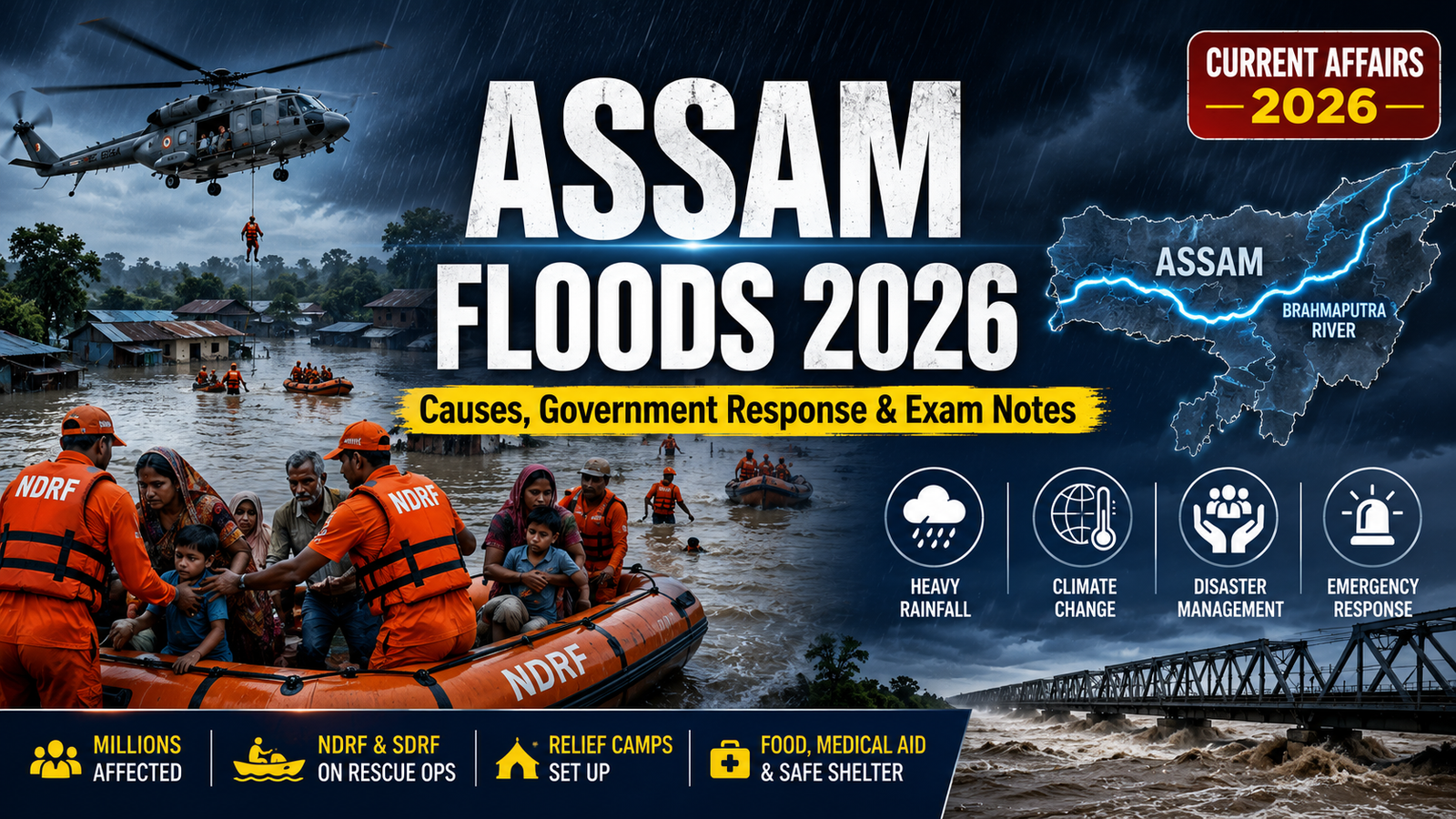
असम में वर्ष 2026 की बाढ़ ने एक बार फिर पूर्वोत्तर भारत की गंभीर बाढ़ समस्या को उजागर किया है। भारी वर्षा, ब्रह्मपुत्र नदी का जलस्तर बढ़ना और जलवायु परिवर्तन जैसे कारणों से लाखों लोग प्रभावित हुए। यह विषय BPSC, UPSC, SSC, Railway तथा अन्य प्रतियोगी परीक्षाओं के लिए अत्यंत महत्वपूर्ण है।
🌊 असम बाढ़ 2026: कारण, सरकारी प्रतिक्रिया एवं परीक्षा नोट्स
वर्ष 2026 में असम एक बार फिर भीषण बाढ़ की चपेट में आ गया। लगातार भारी वर्षा, ब्रह्मपुत्र एवं उसकी सहायक नदियों का जलस्तर बढ़ने तथा कई तटबंधों के क्षतिग्रस्त होने से लाखों लोग प्रभावित हुए। बाढ़ के कारण जनजीवन, कृषि, सड़क एवं रेल परिवहन तथा वन्यजीवों पर भी गंभीर प्रभाव पड़ा।
🌧️ असम में बाढ़ आने के प्रमुख कारण
- लगातार भारी मानसूनी वर्षा जिसके कारण नदियों का जलस्तर तेजी से बढ़ गया।
- ब्रह्मपुत्र नदी एवं उसकी सहायक नदियों में बाढ़ जिससे निचले क्षेत्रों में पानी भर गया।
- भूस्खलन (Landslides) के कारण जल निकासी प्रभावित हुई।
- जलवायु परिवर्तन (Climate Change) के कारण अत्यधिक वर्षा की घटनाओं में वृद्धि।
- नदी तटों का कटाव (River Erosion) जिससे हर वर्ष हजारों परिवार विस्थापित होते हैं।
🏛️ सरकार द्वारा उठाए गए प्रमुख कदम
- ✔️ NDRF एवं SDRF की टीमों द्वारा राहत एवं बचाव अभियान।
- ✔️ प्रभावित लोगों को सुरक्षित स्थानों पर पहुंचाया गया।
- ✔️ राहत शिविर (Relief Camps) स्थापित किए गए।
- ✔️ भोजन, पेयजल, दवाइयों एवं आवश्यक वस्तुओं की व्यवस्था।
- ✔️ राज्य एवं केंद्र सरकार द्वारा लगातार स्थिति की निगरानी।
- ✔️ बाढ़ प्रभावित क्षेत्रों में स्वास्थ्य एवं स्वच्छता अभियान।
📉 बाढ़ का प्रभाव
- हजारों गांव जलमग्न हुए।
- लाखों लोग प्रभावित हुए।
- फसलों एवं कृषि भूमि को भारी नुकसान।
- सड़क एवं रेलवे यातायात बाधित हुआ।
- विद्यालय एवं सरकारी संस्थान अस्थायी रूप से बंद रहे।
- काजीरंगा राष्ट्रीय उद्यान सहित कई वन्यजीव क्षेत्रों पर प्रभाव पड़ा।
🌍 असम में हर वर्ष बाढ़ क्यों आती है?
असम का अधिकांश भाग ब्रह्मपुत्र नदी के विस्तृत बाढ़ मैदान (Flood Plains) में स्थित है। मानसून के दौरान हिमालय से आने वाला अत्यधिक जल, भारी वर्षा तथा नदी में गाद (Silt) जमा होने के कारण नदी की जलधारण क्षमता कम हो जाती है, जिससे लगभग प्रत्येक वर्ष बाढ़ की स्थिति उत्पन्न हो जाती है।
📚 परीक्षा हेतु महत्वपूर्ण तथ्य
- ✔️ राज्य — असम
- ✔️ प्रमुख नदी — ब्रह्मपुत्र
- ✔️ संबंधित विषय — भूगोल, पर्यावरण एवं आपदा प्रबंधन
- ✔️ प्रमुख एजेंसियां — NDRF, SDRF, NDMA
- ✔️ प्रभावित क्षेत्र — ब्रह्मपुत्र घाटी एवं निचले इलाके
- ✔️ परीक्षा — BPSC, UPSC, SSC, Railway, CDS, CAPF
प्रतियोगी परीक्षाओं में अक्सर पूछा जाता है कि असम में बार-बार बाढ़ क्यों आती है?, ब्रह्मपुत्र नदी का महत्व, NDRF एवं NDMA की भूमिका, तथा जलवायु परिवर्तन का बाढ़ पर प्रभाव। इन सभी बिंदुओं का अच्छे से अध्ययन करें।
Assam Floods 2026: Causes, Government Response & Exam Notes
28 Jul 2026
The Assam Floods 2026 have once again highlighted the recurring flood crisis in Northeast India. Heavy rainfall, overflowing rivers, and climate-related factors have affected millions of people, making this an important topic for BPSC, UPSC, SSC, Railway, and other competitive examinations.
🌊 Assam Floods 2026: Causes, Government Response & Exam Notes
Assam experienced another severe flood in 2026 due to continuous monsoon rainfall, rising water levels in the Brahmaputra River, and flooding of its tributaries. The disaster affected millions of people, damaged infrastructure, disrupted transportation, and caused significant losses to agriculture and wildlife. Floods remain one of the biggest natural disasters in Northeast India and are an important topic for competitive examinations.
🌧️ Major Causes of Assam Floods
- Heavy Monsoon Rainfall: Continuous rainfall across Assam and neighboring Himalayan regions caused rivers to overflow.
- Brahmaputra River Overflow: Rising water levels in the Brahmaputra and its tributaries inundated nearby villages and towns.
- River Erosion: Strong river currents eroded riverbanks, forcing thousands of families to relocate.
- Landslides: Landslides in hilly areas blocked natural drainage systems, worsening flood conditions.
- Climate Change: Increasing frequency of extreme rainfall events has made floods more intense and unpredictable.
- Silt Deposition: Large amounts of silt reduce the carrying capacity of rivers, increasing the chances of flooding every year.
🏛️ Government Response
- ✔️ National Disaster Response Force (NDRF) teams conducted rescue operations in flood-affected districts.
- ✔️ State Disaster Response Force (SDRF) personnel assisted in evacuating stranded people.
- ✔️ Relief camps were established to provide shelter, food, drinking water, and medical assistance.
- ✔️ The Assam Government continuously monitored river water levels and issued flood alerts.
- ✔️ Financial assistance and compensation packages were announced for affected families.
- ✔️ Health departments organized vaccination drives and medical camps to prevent disease outbreaks.
- ✔️ Rescue boats, helicopters, and emergency communication systems were deployed in inaccessible areas.
📉 Impact of the Floods
- Thousands of villages remained underwater.
- Millions of people were displaced from their homes.
- Road and railway connectivity was severely disrupted.
- Large agricultural areas suffered extensive crop damage.
- Schools, hospitals, and public services were temporarily affected.
- Livestock losses created financial hardship for rural communities.
- Wildlife habitats, including Kaziranga National Park, were significantly impacted.
🌍 Why Does Assam Face Floods Every Year?
Assam lies in the vast Brahmaputra Floodplain, making it naturally prone to flooding. During the monsoon season, heavy rainfall in the Himalayas rapidly increases the river's discharge. Combined with riverbank erosion, sediment deposition, deforestation, and climate change, the flooding becomes more severe each year.
🚨 Disaster Management Measures
- Construction and strengthening of embankments.
- River dredging to improve water flow.
- Flood forecasting and early warning systems.
- Community awareness and evacuation drills.
- Afforestation and watershed management.
- Improved drainage and urban flood planning.
📚 Quick Exam Notes
| Topic | Key Information |
|---|---|
| State | Assam |
| Major River | Brahmaputra River |
| Disaster Type | Flood |
| Related Subjects | Geography, Environment, Disaster Management, Current Affairs |
| Important Agencies | NDRF, SDRF, NDMA, Assam State Government |
| Important Exams | UPSC, BPSC, SSC, Railway, CDS, CAPF, State PSC |
For competitive exams, remember the causes of floods in Assam, the significance of the Brahmaputra River, the role of NDRF, SDRF, and NDMA, and the impact of climate change on flood frequency. Questions related to disaster management and geography are frequently asked in UPSC, BPSC, SSC, and Railway examinations.