राजव्यवस्था और कानून: कलकत्ता हाईकोर्ट ने पिछली बंगाल सरकार द्वारा जारी सभी OBC प्रमाणपत्रों को किया रद्द
13 Aug 2026
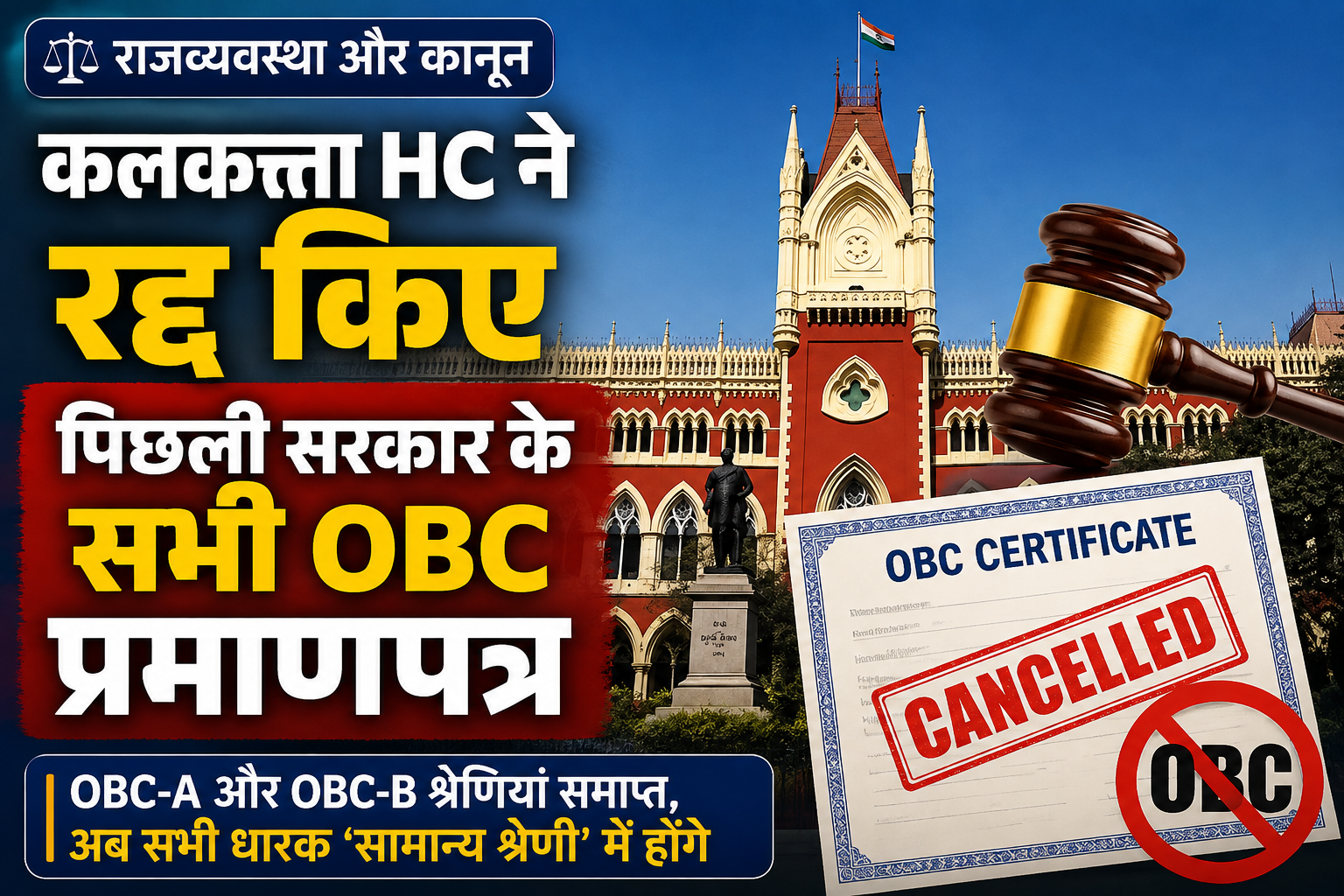
कलकत्ता उच्च न्यायालय ने पिछली टीएमसी सरकार द्वारा जारी सभी OBC-A और OBC-B प्रमाणपत्रों को रद्द कर दिया है। 2026 में नई शुभेंदु अधिकारी सरकार द्वारा नीतिगत बदलाव के बाद, अब राज्य में 'एकल OBC श्रेणी' लागू की गई है।
राजव्यवस्था और कानून: कलकत्ता HC ने रद्द किए पिछली सरकार के सभी OBC प्रमाणपत्र
कलकत्ता उच्च न्यायालय (Calcutta High Court) ने पश्चिम बंगाल में पिछली तृणमूल कांग्रेस सरकार द्वारा शुरू किए गए OBC-A और OBC-B वर्गीकरण के तहत जारी किए गए सभी OBC प्रमाणपत्रों को रद्द कर दिया है। जस्टिस राजशेखर मंथा और जस्टिस अनुज सिंह की खंडपीठ ने फैसला सुनाते हुए कहा कि ये प्रमाणपत्र अब अपनी वैधता खो चुके हैं।
⚖️ फैसले के मुख्य बिंदु और नीतिगत बदलाव:
- प्रमाणपत्र धारकों पर प्रभाव: हाईकोर्ट ने स्पष्ट किया कि चूंकि राज्य में अब ये दोनों वर्गीकरण मौजूद नहीं हैं, इसलिए इन रद्द किए गए प्रमाणपत्रों के धारकों को अब 'सामान्य श्रेणी' (General Category) का माना जाएगा।
- विवाद की पृष्ठभूमि: यह विवाद 2010 से जुड़ा है, जब राज्य ने OBC समुदायों को A और B श्रेणियों में विभाजित किया था। इससे पहले 2024 में, हाईकोर्ट ने 66 समुदायों को OBC सूची से बाहर कर दिया था और एक नए सिरे से सर्वेक्षण का आदेश दिया था।
- 2026 में बड़ा बदलाव: 2026 में सत्ता में आने के बाद, मुख्यमंत्री शुभेंदु अधिकारी के नेतृत्व वाली भाजपा सरकार ने OBC-A और OBC-B वर्गीकरण को पूरी तरह समाप्त कर दिया और राज्य में एक 'एकल OBC श्रेणी' (Single OBC category) की शुरुआत की।
- कानूनी चुनौती वापस: नई सरकार ने सुप्रीम कोर्ट में पिछली सरकार द्वारा दायर की गई कानूनी चुनौती को वापस ले लिया। पुरानी प्रणाली का कानूनी आधार खत्म होने के साथ ही, हाईकोर्ट ने पुराने प्रमाणपत्रों को अमान्य करने का यह अंतिम आदेश पारित कर दिया।
🛡️ सामाजिक न्याय के ढांचे का पुनर्गठन
यह न्यायिक और कार्यकारी फैसला पश्चिम बंगाल की आरक्षण नीति (affirmative action policy) में एक बड़े बदलाव का प्रतीक है। खंडित उप-कोटा प्रणाली से हटकर एक एकीकृत OBC श्रेणी की ओर बढ़ने का उद्देश्य आरक्षण को सुव्यवस्थित करना, संवैधानिक जनादेश का अनुपालन सुनिश्चित करना और जाति-आधारित वर्गीकरण से जुड़ी लंबी कानूनी अस्पष्टताओं को हल करना है।
Polity & Law: Calcutta HC Cancels All OBC Certificates Issued Under Previous West Bengal Govt
13 Aug 2026
The Calcutta High Court has cancelled all OBC-A and OBC-B certificates issued by the previous TMC government. Following a policy shift by the new Suvendu Adhikari-led government in 2026, a single OBC category has now been introduced.
Polity & Law: Calcutta HC Cancels All OBC Certificates Issued Under Previous Govt
The Calcutta High Court has officially cancelled all OBC certificates issued under the OBC-A and OBC-B classifications introduced by the previous Trinamool Congress government in West Bengal. A division bench of Justice Rajasekhar Mantha and Justice Anuj Singh delivered the judgement, declaring that these certificates have lost their validity.
⚖️ Key Highlights of the Order & Policy Shift:
- Impact on Certificate Holders: The High Court stated that since the two classifications no longer exist in the state, the holders of these cancelled certificates will now be treated as belonging to the general category.
- Historical Background: The controversy dates back to 2010 when the state divided OBC communities into A and B categories. Earlier in 2024, the High Court had struck down the inclusion of 66 communities from the OBC list and ordered a fresh survey.
- 2026 Policy Overhaul: After assuming power in 2026, the BJP government, led by Chief Minister Suvendu Adhikari, abolished the OBC-A and OBC-B sub-classifications and introduced a unified, single OBC category in the state.
- Withdrawal of Legal Challenge: The new administration withdrew the previous government’s challenge in the Supreme Court. With the legal basis of the old system gone, the High Court passed the final order to invalidate the earlier certificates.
🛡️ Restructuring Social Justice Architecture
This judicial and executive overhaul marks a massive shift in West Bengal's affirmative action policy. Moving from a fragmented sub-quota system back to a unified OBC category aims to streamline reservations, ensure compliance with constitutional mandates, and resolve prolonged legal ambiguities surrounding caste-based classifications.
Trending Current Affairs
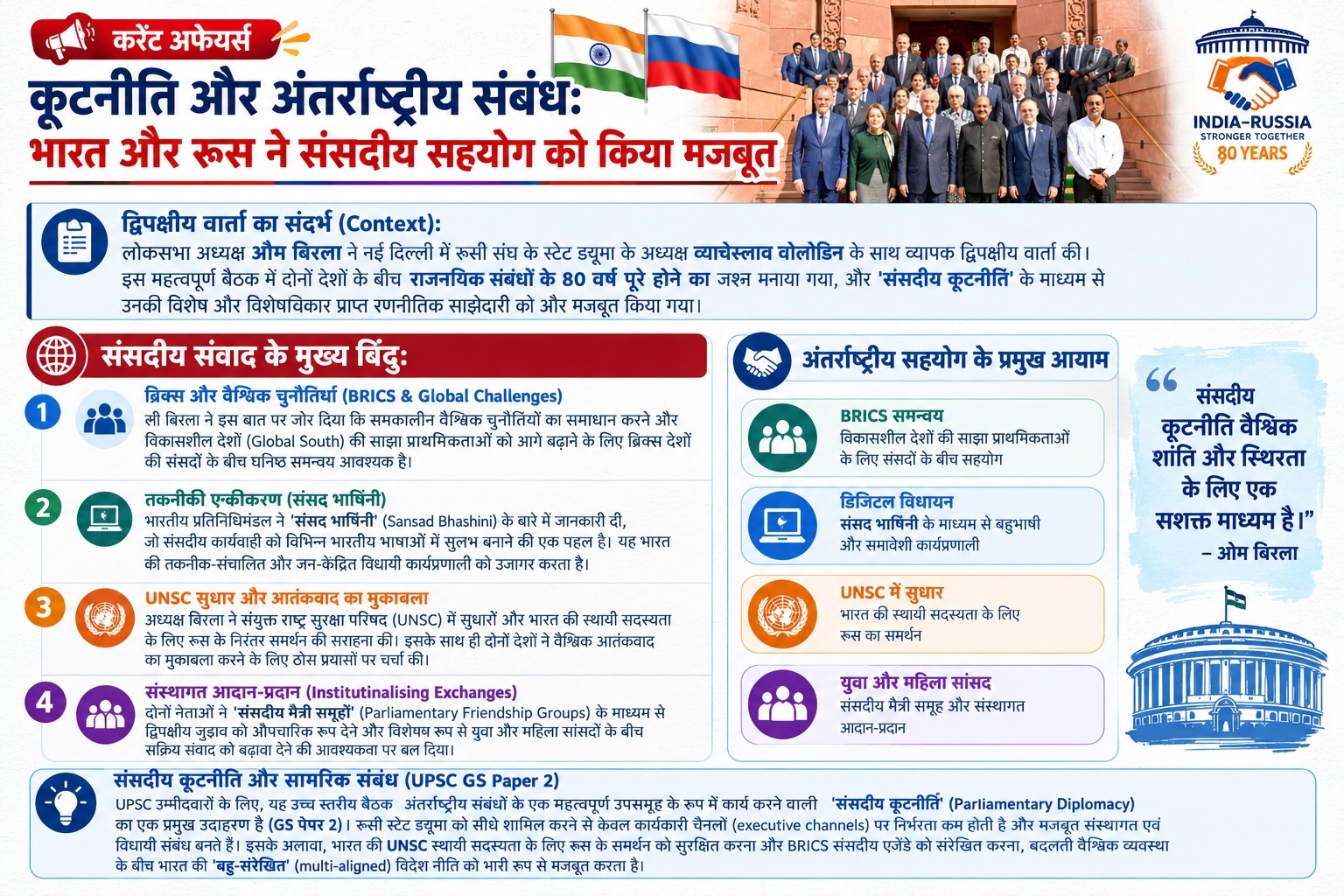
कूटनीति और अंतर्राष्ट्रीय संबंध: लोकसभा अध्यक्ष ओम बिरला और रूसी स्टेट ड्यूमा के अध्यक्ष के बीच द्विपक्षीय वार्ता
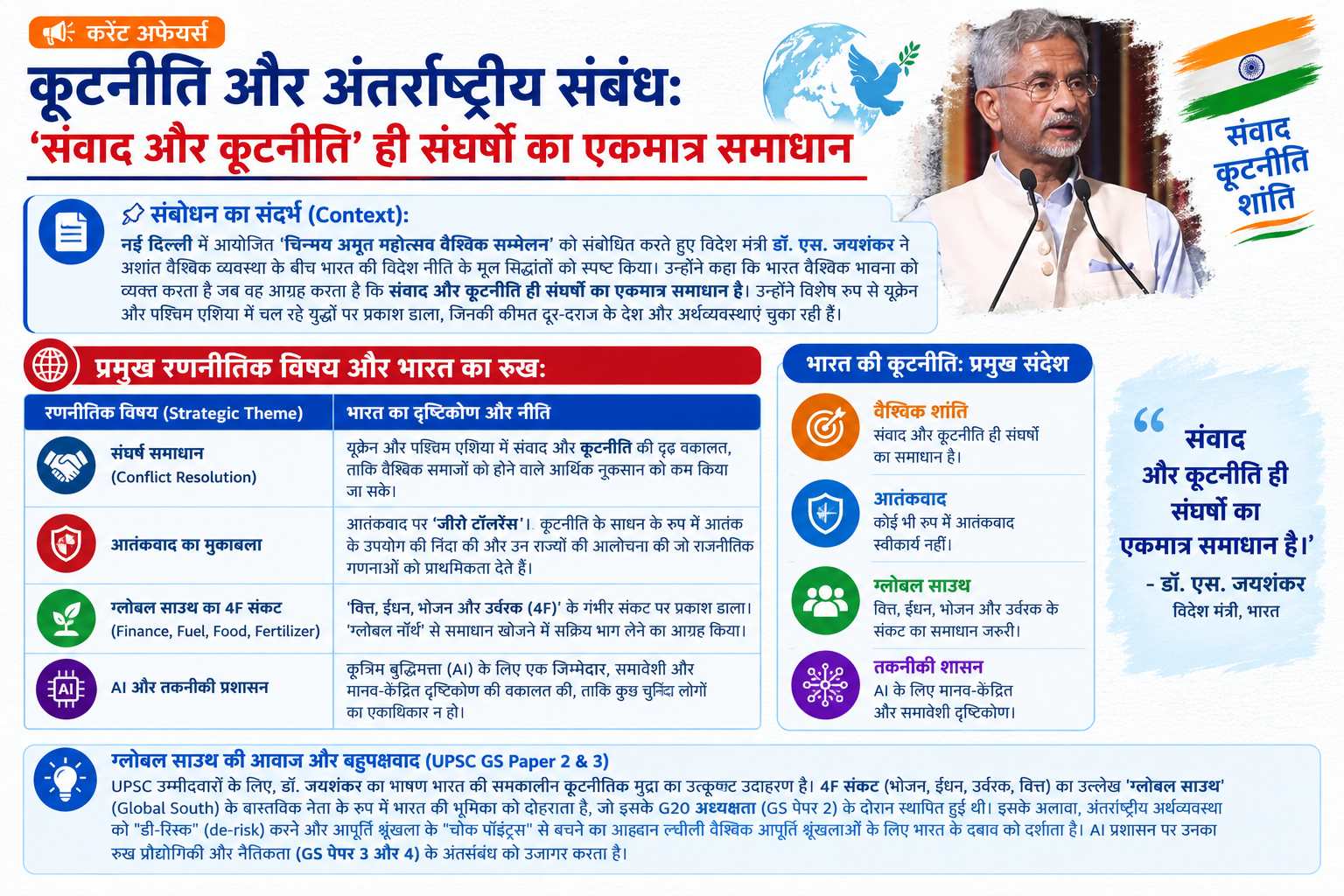
कूटनीति और अंतर्राष्ट्रीय संबंध: 'संवाद और कूटनीति' ही वैश्विक संघर्षों का एकमात्र समाधान - विदेश मंत्री जयशंकर