विधि और न्याय: सुप्रीम कोर्ट ने एंट्री-लेवल न्यायिक परीक्षाओं के लिए अनिवार्य प्रैक्टिस को घटाकर 1 साल किया
21 Aug 2026
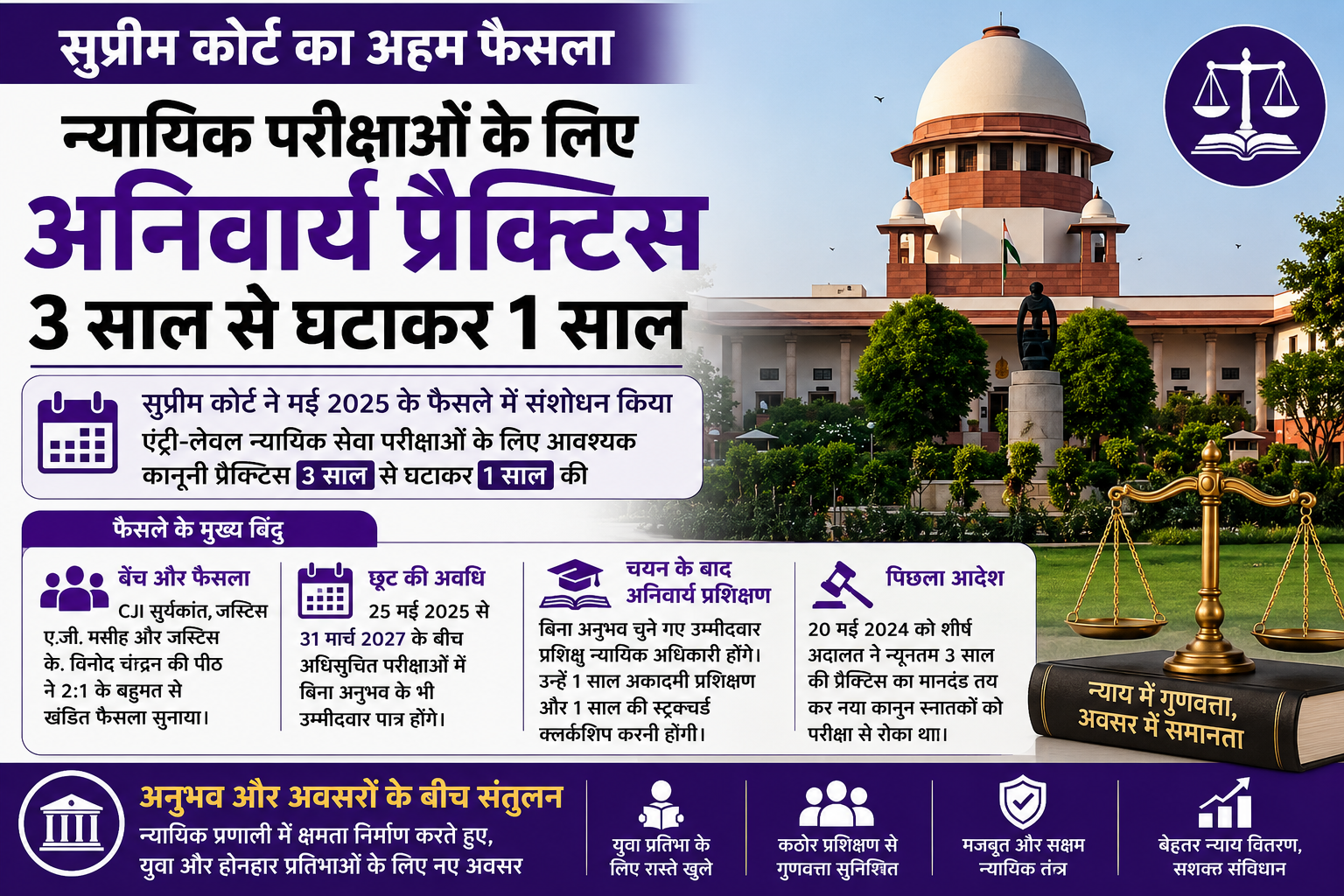
सुप्रीम कोर्ट ने अपने मई 2025 के फैसले को संशोधित करते हुए, एंट्री-लेवल न्यायिक सेवा परीक्षाओं में शामिल होने वाले कानून के स्नातकों (law graduates) के लिए अनिवार्य प्रैक्टिस की आवश्यकता को 3 साल से घटाकर 1 साल कर दिया है।
विधि और न्याय: सुप्रीम कोर्ट ने न्यायिक परीक्षाओं के लिए अनिवार्य प्रैक्टिस घटाई
सुप्रीम कोर्ट ने आज अपने मई 2025 के फैसले को आधिकारिक तौर पर संशोधित कर दिया है। अदालत ने एंट्री-लेवल न्यायिक सेवा परीक्षाओं (entry-level judicial service exams) में शामिल होने वाले कानून के स्नातकों के लिए अनिवार्य कानूनी प्रैक्टिस को 3 साल से घटाकर 1 साल कर दिया है।
⚖️ सुप्रीम कोर्ट के फैसले के मुख्य बिंदु:
- बेंच और फैसला: एक पुनर्विचार याचिका (review petition) को खारिज करते हुए, चीफ जस्टिस सूर्यकांत, जस्टिस ए.जी. मसीह और जस्टिस के. विनोद चंद्रन की पीठ ने 2:1 के बहुमत से यह खंडित फैसला (split decision) सुनाया।
- छूट की विशेष अवधि: 25 मई 2025 से 31 मार्च 2027 के बीच अधिसूचित (notified) न्यायिक सेवा परीक्षाओं में बैठने वाले उम्मीदवार बिना किसी पूर्व अनुभव के भी पात्र रहेंगे।
- चयन के बाद अनिवार्य प्रशिक्षण: अनुभव के बिना चुने गए उम्मीदवारों को 'प्रशिक्षु न्यायिक अधिकारी' (trainee judicial officers) के रूप में नियुक्त किया जाएगा। उन्हें न्यायिक अकादमी में एक साल का कड़ा प्रशिक्षण लेना होगा, जिसके बाद एक साल की स्ट्रक्चर्ड क्लर्कशिप (structured clerkship) करनी होगी।
- पिछला आदेश: पिछले साल 20 मई को, शीर्ष अदालत ने न्यूनतम 3 साल की प्रैक्टिस का कड़ा मानदंड तय करके नए कानून स्नातकों (fresh law graduates) को इस परीक्षा में बैठने से पूरी तरह रोक दिया था।
🏛️ अनुभव और अवसरों के बीच संतुलन
यह महत्वपूर्ण संशोधन न्यायिक अधिकारियों के लिए व्यावहारिक कानूनी अनुभव की आवश्यकता और युवा स्नातकों के करियर में होने वाली देरी के बीच एक संतुलन बनाता है। चयन के बाद अनिवार्य अकादमी प्रशिक्षण और क्लर्कशिप की शुरुआत करके, न्यायालय का उद्देश्य युवा और होनहार प्रतिभाओं के लिए दरवाजे बंद किए बिना प्रणाली में क्षमता का निर्माण करना है।
Law & Justice: Supreme Court Reduces Mandatory Practice for Judicial Exams to One Year
21 Aug 2026
Modifying its May 2025 verdict, the Supreme Court has reduced the mandatory legal practice requirement for entry-level judicial service exams from three years to one year, offering relief to young law graduates.
Law & Justice: SC Reduces Mandatory Practice for Judicial Exams
The Supreme Court today officially modified its earlier May 2025 verdict. It has reduced the mandatory legal practice requirement from three years to one year for law graduates seeking to appear in entry-level judicial service examinations across the country.
⚖️ Key Highlights of the SC Judgment:
- The Bench & Decision: The 2:1 split decision was delivered by a Bench comprising Chief Justice Surya Kant and Justices A.G. Masih and K. Vinod Chandran while dismissing a review petition.
- Exemption Period (2025-2027): Candidates appearing for judicial exams notified between May 25, 2025, and March 31, 2027, will remain eligible to appear regardless of their prior experience.
- Mandatory Post-Selection Training: Candidates selected without experience during this window will be appointed as trainee judicial officers. They must undergo a rigorous one-year training at a judicial academy, followed by another year of structured clerkship.
- The Previous Stance: On May 20 last year, the top court had strictly barred fresh law graduates from taking the entry-level judicial services exam by mandating a minimum three-year practice criterion.
🏛️ Balancing Experience with Opportunity
This significant modification bridges the gap between requiring practical legal experience for judicial officers and preventing prolonged career delays for fresh law graduates. By introducing mandatory post-selection academy training and structured clerkships, the Court aims to build competence without closing doors for young, meritorious talent.
Trending Current Affairs
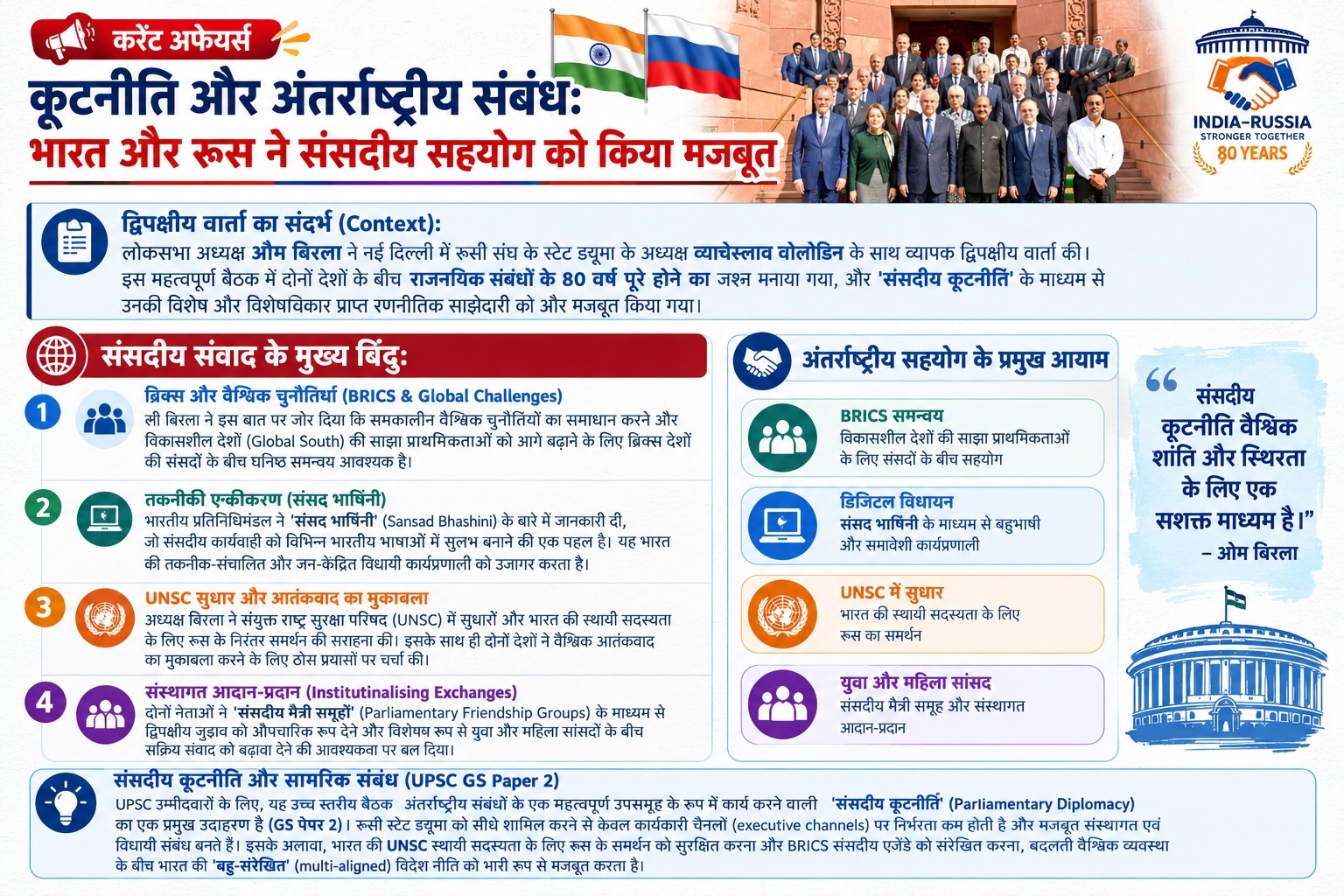
कूटनीति और अंतर्राष्ट्रीय संबंध: लोकसभा अध्यक्ष ओम बिरला और रूसी स्टेट ड्यूमा के अध्यक्ष के बीच द्विपक्षीय वार्ता
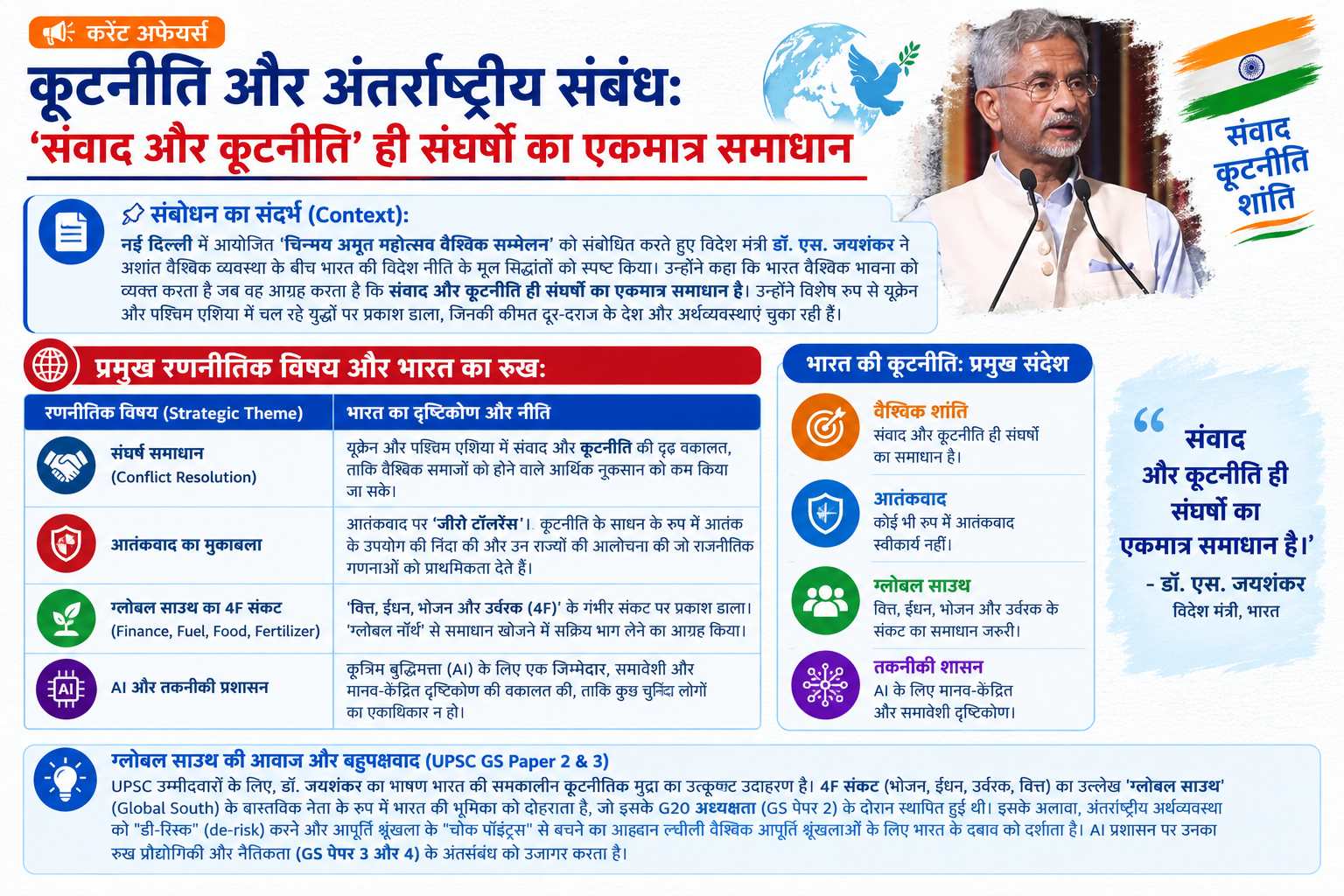
कूटनीति और अंतर्राष्ट्रीय संबंध: 'संवाद और कूटनीति' ही वैश्विक संघर्षों का एकमात्र समाधान - विदेश मंत्री जयशंकर