पर्यावरण और पारिस्थितिकी: मानव-प्रकृति सह-अस्तित्व पारिस्थितिक संरक्षण का आधार
02 Sep 2026
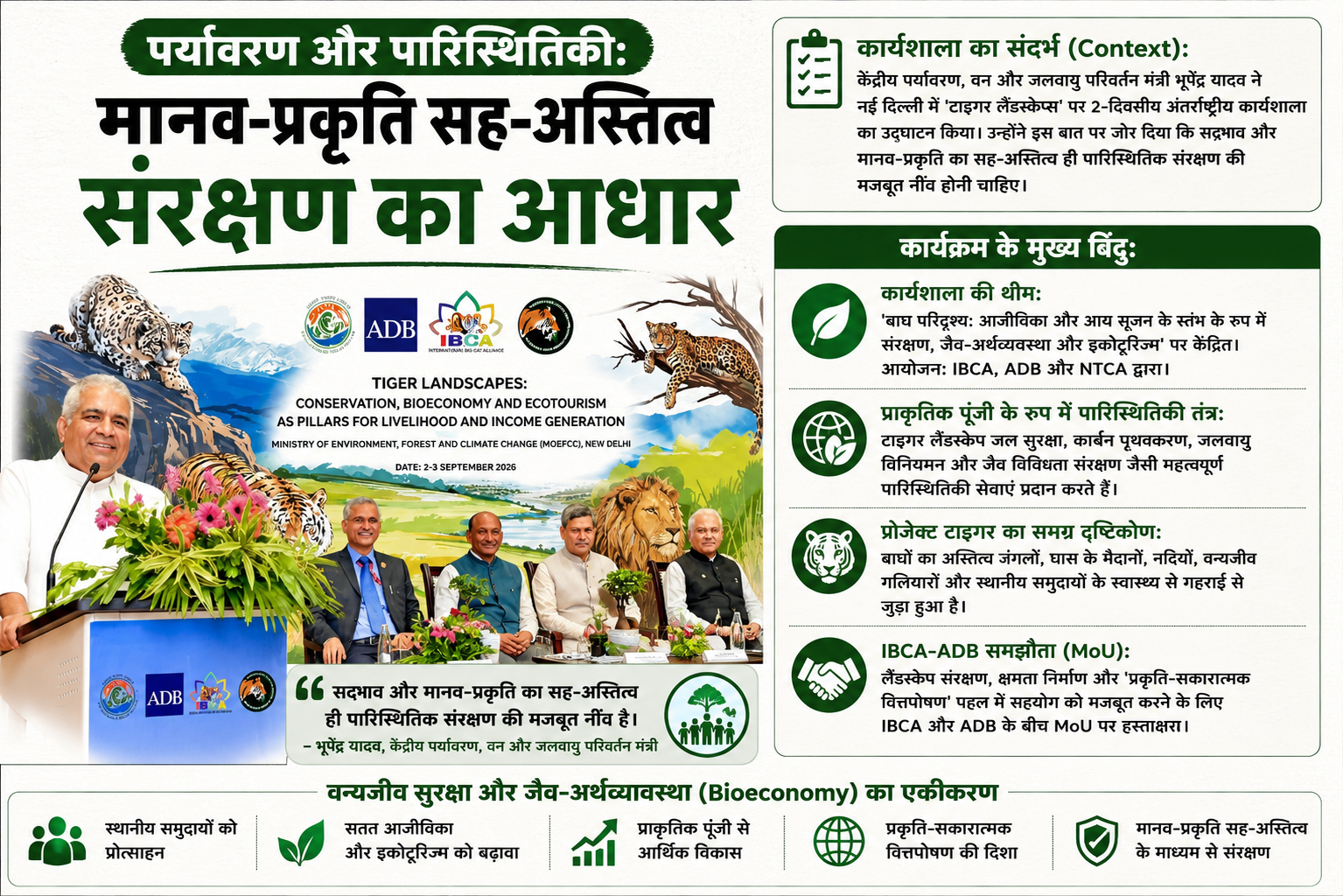
केंद्रीय मंत्री भूपेंद्र यादव ने 'टाइगर लैंडस्केप्स' पर अंतर्राष्ट्रीय कार्यशाला का उद्घाटन किया। इकोटूरिज्म को बढ़ावा देने और प्रकृति-सकारात्मक वित्तपोषण के लिए IBCA और ADB के बीच समझौता हुआ।
केंद्रीय पर्यावरण, वन और जलवायु परिवर्तन मंत्री भूपेंद्र यादव ने नई दिल्ली में 'टाइगर लैंडस्केप्स' (Tiger Landscapes) पर 2-दिवसीय अंतर्राष्ट्रीय कार्यशाला का उद्घाटन किया। उन्होंने इस बात पर जोर दिया कि सद्भाव और मानव-प्रकृति का सह-अस्तित्व (human-nature coexistence) ही पारिस्थितिक संरक्षण की मजबूत नींव होनी चाहिए।
- कार्यशाला की थीम: इंटरनेशनल बिग कैट एलायंस (IBCA), एशियाई विकास बैंक (ADB) और राष्ट्रीय बाघ संरक्षण प्राधिकरण (NTCA) द्वारा आयोजित इस कार्यशाला का विषय 'बाघ परिदृश्य: आजीविका और आय सृजन के स्तंभ के रूप में संरक्षण, जैव-अर्थव्यवस्था और इकोटूरिज्म' है।
- प्राकृतिक पूंजी के रूप में पारिस्थितिकी तंत्र: टाइगर लैंडस्केप को अमूल्य 'प्राकृतिक पूंजी' (Natural Capital) के रूप में रेखांकित किया गया, जो जल सुरक्षा, कार्बन पृथक्करण (carbon sequestration), जलवायु विनियमन और जैव विविधता संरक्षण जैसी महत्वपूर्ण सेवाएं प्रदान करते हैं।
- प्रोजेक्ट टाइगर का समग्र दृष्टिकोण: मंत्री ने बताया कि बाघों का अस्तित्व केवल उनकी रक्षा तक सीमित नहीं है, बल्कि यह जंगलों, घास के मैदानों, नदियों, वन्यजीव गलियारों (wildlife corridors) और इन आवासों को साझा करने वाले स्थानीय समुदायों के स्वास्थ्य से गहराई से जुड़ा हुआ है।
- IBCA-ADB समझौता (MoU): लैंडस्केप संरक्षण, क्षमता निर्माण और 'प्रकृति-सकारात्मक वित्तपोषण' (Nature-positive Financing) पहल में सहयोग को मजबूत करने के लिए IBCA और ADB के बीच एक महत्वपूर्ण समझौता ज्ञापन पर हस्ताक्षर किए गए।
बाघ अभयारण्यों को 'प्राकृतिक पूंजी' के रूप में देखने से संरक्षण का नैरेटिव केवल सुरक्षा से हटकर सतत आर्थिक विकास की ओर मुड़ जाता है। इकोटूरिज्म और बायोइकॉनमी का लाभ उठाकर, भारत का लक्ष्य वन-आश्रित स्थानीय समुदायों को प्रोत्साहित करना है, जिससे वे संसाधनों के प्रतिस्पर्धी होने के बजाय पारिस्थितिक सुरक्षा में सक्रिय भागीदार (stakeholders) बन सकें।
Environment & Ecology: Human-Nature Coexistence Core to Ecological Conservation
02 Sep 2026
Union Minister Bhupender Yadav inaugurated an international workshop on 'Tiger Landscapes', highlighting the role of bioeconomy and ecotourism. IBCA and ADB also signed an MoU for nature-positive financing.
Union Minister for Environment, Forest and Climate Change, Bhupender Yadav, inaugurated a 2-day International Workshop in New Delhi focusing on 'Tiger Landscapes'. He emphasized that ecological conservation must be fundamentally built on the principles of harmony and human-nature coexistence.
- Workshop Theme: Jointly organized by the International Big Cat Alliance (IBCA), Asian Development Bank (ADB), and National Tiger Conservation Authority (NTCA), the theme was ‘Tiger Landscapes: Conservation, Bioeconomy and Ecotourism as Pillars for Livelihood and Income Generation’.
- Ecosystem Services as Natural Capital: Tiger landscapes were highlighted as invaluable 'natural capital' that provides critical services such as water security, carbon sequestration, climate regulation, and biodiversity conservation.
- Project Tiger's Holistic Vision: The Minister noted that the survival of tigers is intrinsically linked to the overall health of forests, grasslands, rivers, wildlife corridors, and the local communities sharing these habitats.
- Strategic IBCA-ADB MoU: A significant milestone was the signing of a Memorandum of Understanding (MoU) between IBCA and ADB to strengthen collaboration in landscape conservation, capacity building, and nature-positive financing initiatives.
Treating tiger reserves as 'natural capital' shifts the conservation narrative from mere protection to sustainable economic generation. By actively leveraging ecotourism and a bioeconomy, India aims to incentivize local forest-dwelling communities, transforming them from potential resource-competitors into active stakeholders in long-term ecological security.
Trending Current Affairs
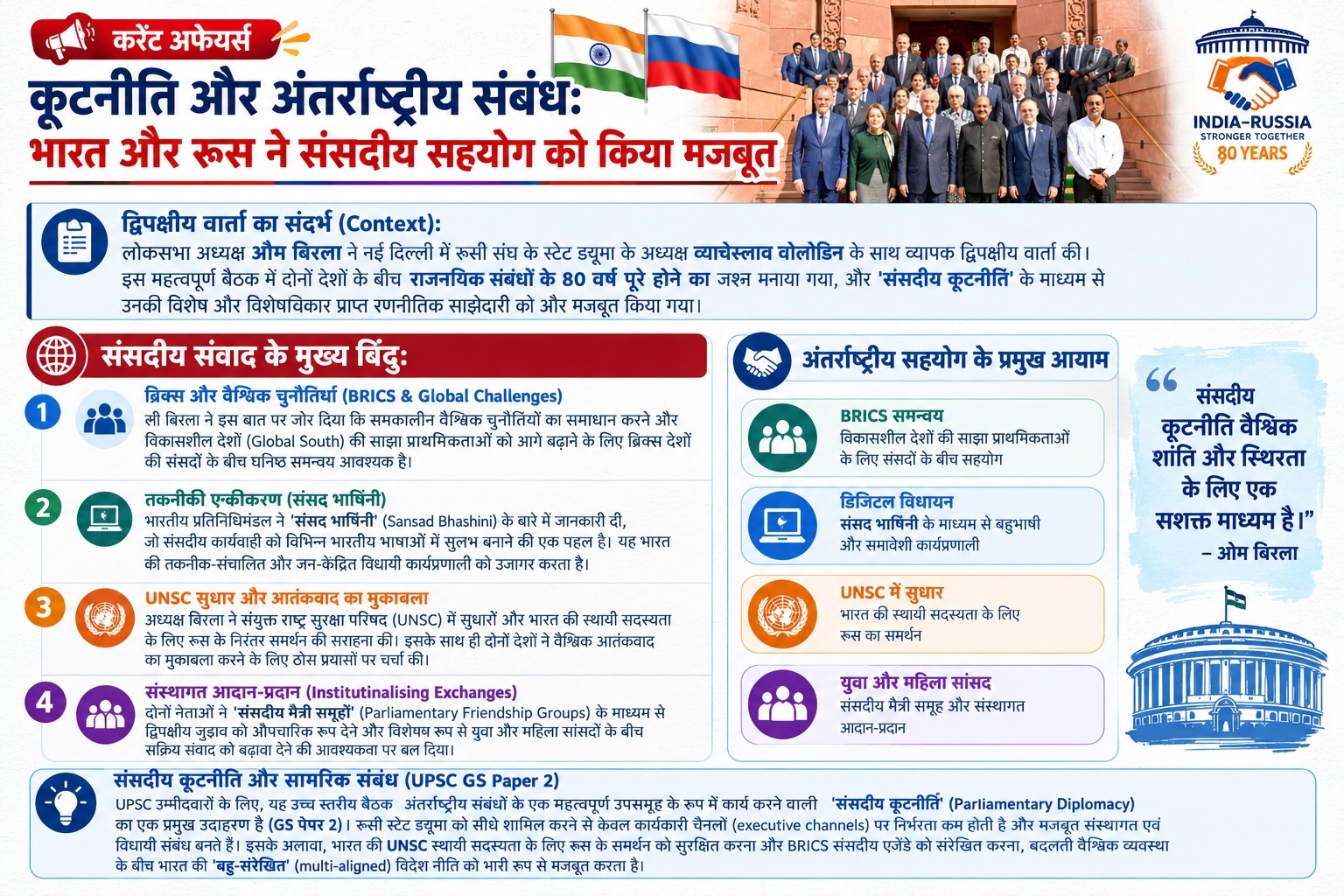
कूटनीति और अंतर्राष्ट्रीय संबंध: लोकसभा अध्यक्ष ओम बिरला और रूसी स्टेट ड्यूमा के अध्यक्ष के बीच द्विपक्षीय वार्ता
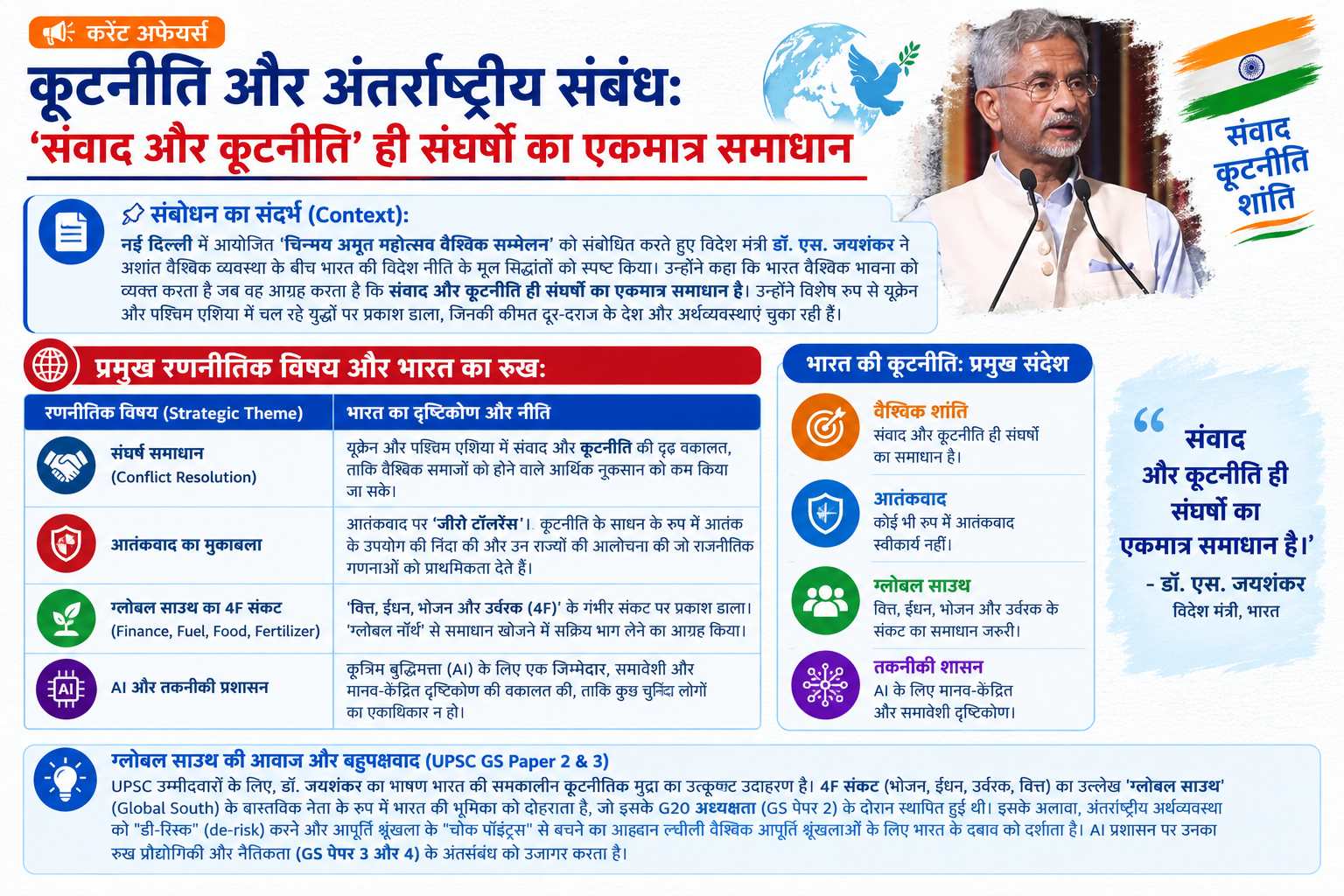
कूटनीति और अंतर्राष्ट्रीय संबंध: 'संवाद और कूटनीति' ही वैश्विक संघर्षों का एकमात्र समाधान - विदेश मंत्री जयशंकर