अगले परिसीमन के लिए EAC-PM की सिफारिश: लोकसभा में होंगी 824 सीटें, 'लक्षित विभाजन' का प्रस्ताव
12 Jun 2026
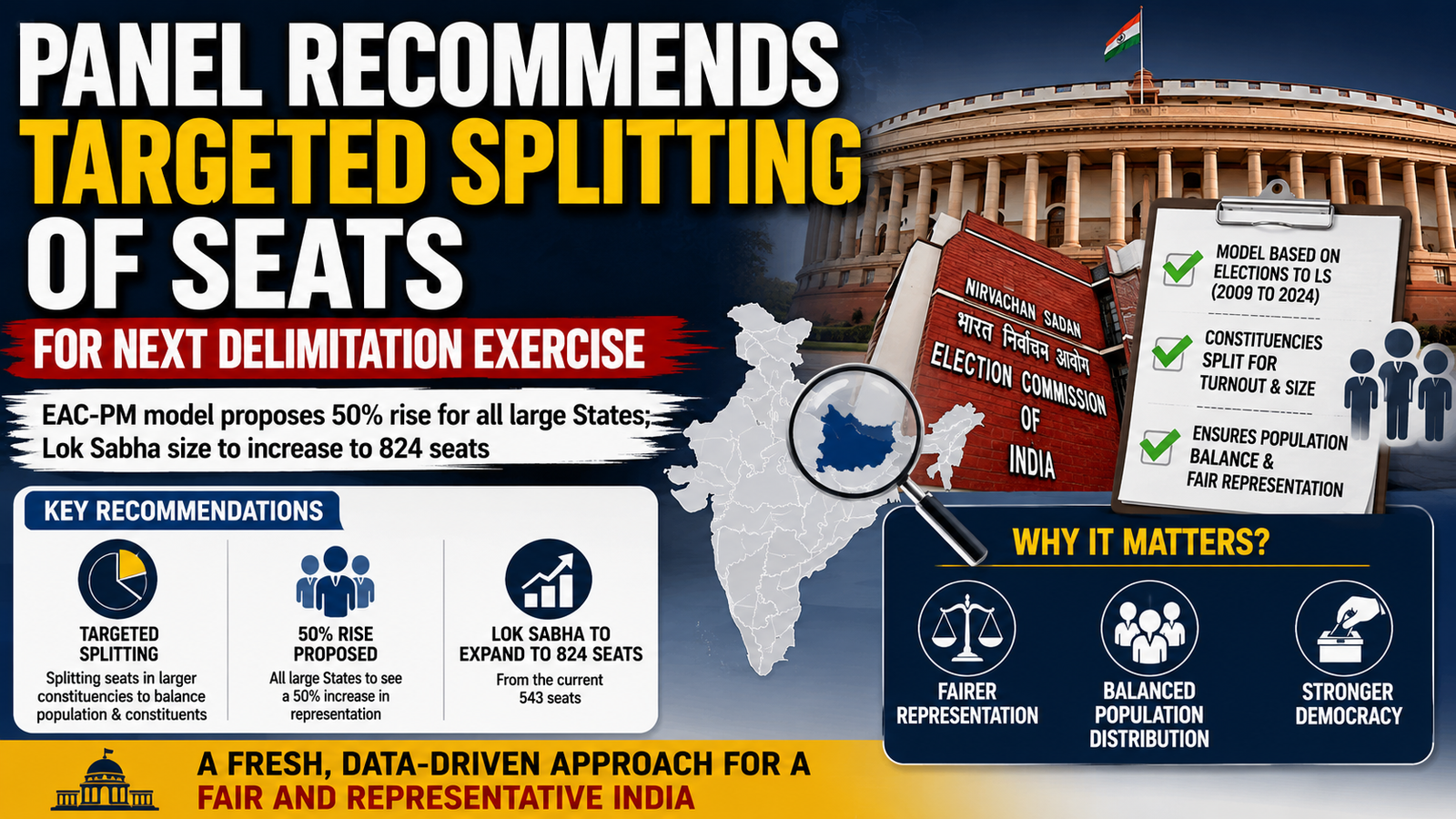
प्रधानमंत्री की आर्थिक सलाहकार परिषद (EAC-PM) ने भारत के आगामी परिसीमन (Delimitation) के लिए एक नया मॉडल पेश किया है। इसमें लोकसभा की क्षमता 824 सीटों तक बढ़ाने का प्रस्ताव है, जबकि यह सुनिश्चित किया गया है कि उत्तर और दक्षिण भारतीय राज्यों का आनुपातिक प्रतिनिधित्व (Proportional Representation) पहले जैसा ही बना रहे।
भारतीय राजव्यवस्था: अगले परिसीमन (Delimitation) के लिए EAC-PM का नया फॉर्मूला
🏛️ प्रस्तावित मॉडल की प्रमुख विशेषताएं:
- 824 सीटों तक विस्तार: यह मॉडल लोकसभा का आकार 543 से बढ़ाकर 824 सीटें करने का सुझाव देता है। इसके तहत मौजूदा 543 में से 170 सीटों को विभाजित करने की बात कही गई है।
- उत्तर-दक्षिण का संतुलन: इस मॉडल की सबसे बड़ी खूबी यह है कि इसमें राज्यों का आनुपातिक प्रतिनिधित्व नहीं बदलेगा। दक्षिणी राज्यों की कुल हिस्सेदारी लगभग 23.6% (वर्तमान में 23.7%) और 6 सबसे अधिक आबादी वाले उत्तरी राज्यों की हिस्सेदारी 45.2% (वर्तमान में 45.6%) बनी रहेगी।
- राज्यों के उदाहरण: इसके तहत केरल की सीटें 20 से 30, तमिलनाडु की 39 से 59 और उत्तर प्रदेश की 80 से 120 हो जाएंगी। छोटे राज्यों और केंद्र शासित प्रदेशों में सीटें दोगुनी हो जाएंगी।
- जनसंख्या के अलावा अन्य मानदंड: पैनल का सुझाव है कि परिसीमन आयोग को केवल जनसंख्या के आधार पर नहीं, बल्कि जनसांख्यिकीय और भाषाई प्रोफाइल (शहरी हिस्सा, SC/ST हिस्सा, भाषाई विविधता) और मतदान प्रतिशत (Voter Turnout) के आधार पर सीटों का विभाजन करना चाहिए।
🎯 मुख्य उद्देश्य: मतदान प्रतिशत बढ़ाना
लेखकों का तर्क है कि यह सांख्यिकीय मॉडल लोकतांत्रिक भागीदारी को बढ़ावा देने के लिए डिज़ाइन किया गया है। उनका अनुमान है कि इस लक्षित विभाजन से अगले आम चुनाव में देश भर में मतदान (Voter Turnout) में 2.3% तक की समग्र वृद्धि हो सकती है। इसका विशेष ध्यान शहरी क्षेत्रों में महिलाओं के मतदान प्रतिशत के अंतर को पाटना भी है।
EAC-PM Proposes 824 Lok Sabha Seats: Recommends 'Targeted Splitting' for Next Delimitation
12 Jun 2026
The Economic Advisory Council to the PM (EAC-PM) has proposed a groundbreaking model for India's next delimitation exercise. It recommends expanding the Lok Sabha to 824 seats through a "targeted splitting" of 170 existing constituencies based on demographic and linguistic profiles, ensuring the proportional representation of North and South Indian states remains unchanged.
Indian Polity: Panel Recommends 'Targeted Splitting' for Next Delimitation
🏛️ Key Features of the Proposed Model:
- Expansion to 824 Seats: The model suggests increasing the size of the Lok Sabha from 543 to 824 seats. Out of the existing 543 seats, it suggests splitting 170 seats (59 for a two-way split and 111 for a three-way split).
- Resolving the North-South Divide: The model brilliantly maintains the current proportion of seats for all large states. The Southern States' aggregate share will remain around 23.6% (currently 23.7%), and the six most populous Northern States will hold 45.2% (currently 45.6%).
- State-wise Examples: Kerala's seats would increase from 20 to 30, Tamil Nadu’s from 39 to 59, and Uttar Pradesh's from 80 to 120. Smaller states and UTs will see a doubling of their seats.
- Criteria Beyond Population: Unlike previous exercises, the panel advises that the Delimitation Commission should use joint demographic and linguistic profiles (urban share, SC/ST share, linguistic diversity) and voter turnout as criteria for splitting, rather than just population size.
🎯 The Objective: Maximising Voter Turnout
The authors argue that this statistical model is designed to boost democratic participation. They estimate that this targeted splitting could lead to an overall increase of up to 2.3% in voter turnout across the country in the next general election. It also specifically aims to bridge the persistent gap in women's voter turnout in urban areas.