ओडिशा बाढ़ 2026: 20 जिलों में 7 लाख से अधिक लोग प्रभावित
31 Jul 2026
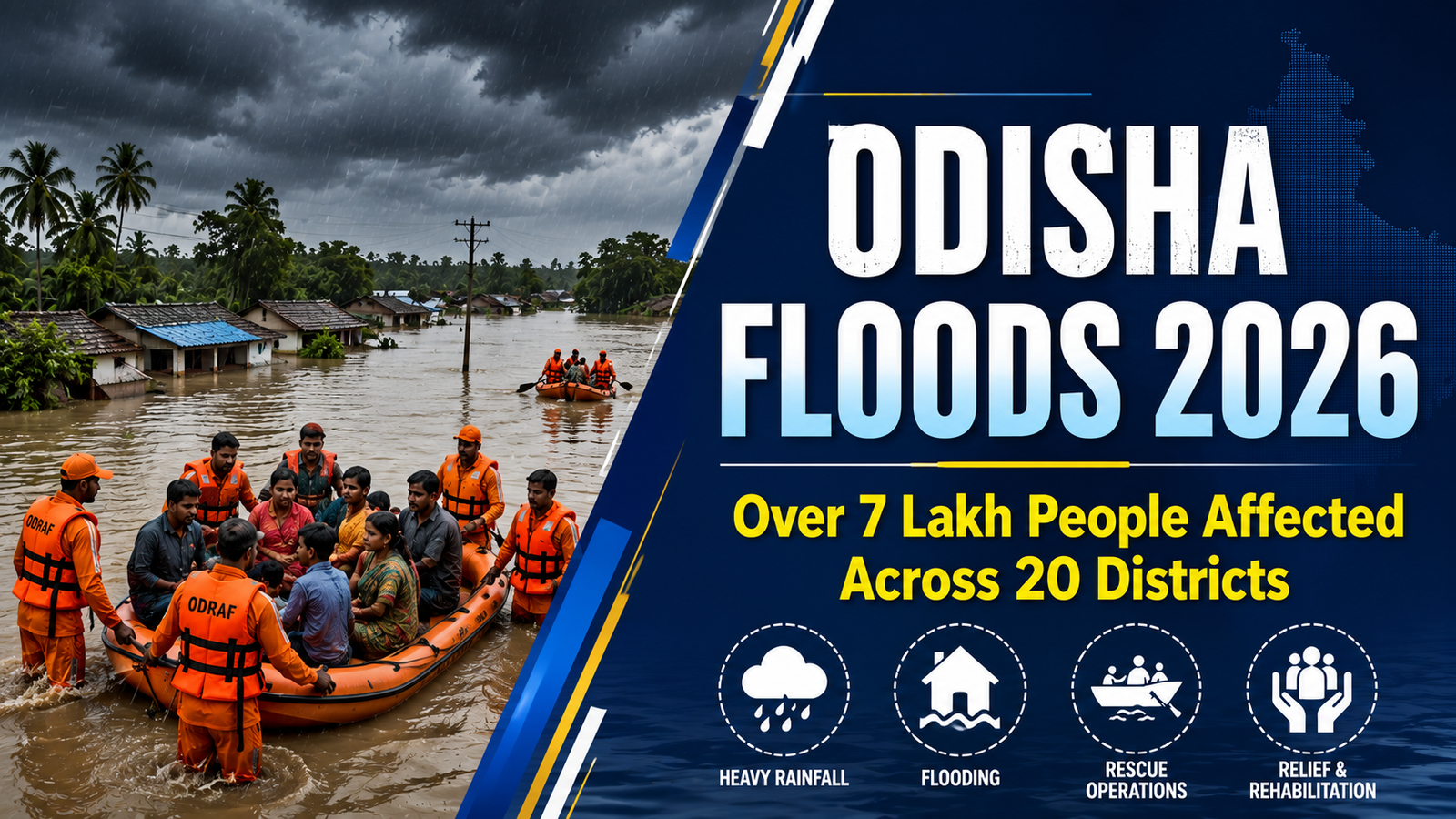
ओडिशा में लगातार भारी बारिश और गहरे निम्न दबाव (Deep Depression) के कारण भीषण बाढ़ की स्थिति बन गई है। 20 जिलों के 7 लाख से अधिक लोग प्रभावित हुए हैं। जानिए बाढ़ के कारण, प्रभावित जिले, राहत कार्य, सरकारी कदम और प्रतियोगी परीक्षाओं के लिए महत्वपूर्ण तथ्य।
पर्यावरण एवं आपदा प्रबंधन: ओडिशा बाढ़ 2026 – 20 जिलों में 7 लाख से अधिक लोग प्रभावित
ओडिशा में लगातार हुई भारी वर्षा और ओडिशा-छत्तीसगढ़ क्षेत्र में बने Deep Depression (गहरे निम्न दबाव) के कारण भीषण बाढ़ की स्थिति उत्पन्न हो गई है। राज्य के 20 जिलों में 7 लाख से अधिक लोग प्रभावित हुए हैं। सबसे अधिक प्रभावित जिलों में भद्रक, बालासोर और जाजपुर शामिल हैं। राज्य सरकार, ओडिशा डिजास्टर रैपिड एक्शन फोर्स (ODRAF) तथा अन्य राहत एजेंसियाँ लगातार बचाव एवं राहत कार्य चला रही हैं।
📌 प्रमुख तथ्य:
- 7 लाख से अधिक लोग प्रभावित: राज्य के 20 जिलों में बाढ़ के कारण लाखों लोगों का जनजीवन प्रभावित हुआ है।
- रिकॉर्ड वर्षा: जुलाई माह में ओडिशा में 644.1 मिमी वर्षा दर्ज की गई, जबकि सामान्य औसत 327.4 मिमी है। यह लगभग 96.7% अधिक वर्षा है।
- सबसे अधिक प्रभावित जिला: भद्रक जिले में लगभग 4 लाख लोग बाढ़ से प्रभावित हुए हैं। इसके अलावा बालासोर और जाजपुर भी गंभीर रूप से प्रभावित हैं।
- राहत शिविर: राज्य सरकार ने प्रभावित लोगों के लिए 234 राहत शिविर स्थापित किए हैं, जहाँ एक लाख से अधिक लोगों को सुरक्षित स्थानों पर रखा गया है।
- बचाव अभियान: राज्यभर में 136 राहत एवं बचाव दल तैनात किए गए हैं, जिनमें ODRAF की टीमें भी शामिल हैं।
- प्रमुख नदियाँ: बाढ़ का सबसे अधिक प्रभाव महानदी और ब्रह्मणी नदी बेसिन में देखा गया है। लगातार बारिश के कारण जलस्तर बढ़ने की आशंका बनी हुई है।
- जनहानि: राज्य सरकार के अनुसार अब तक तीन लोगों की मृत्यु की सूचना मिली है, जबकि कृषि, सड़क और सार्वजनिक संपत्तियों का आकलन किया जा रहा है।
🎯 प्रतियोगी परीक्षाओं के लिए महत्व
ओडिशा बाढ़ 2026 UPSC, BPSC, SSC, Railway, Banking, NDA तथा अन्य प्रतियोगी परीक्षाओं के लिए अत्यंत महत्वपूर्ण करंट अफेयर्स विषय है। इससे संबंधित प्रश्न आपदा प्रबंधन (Disaster Management), जलवायु परिवर्तन (Climate Change), नदी तंत्र (River System), राहत एजेंसियाँ (NDMA, NDRF, ODRAF) तथा सरकारी राहत उपायों से पूछे जा सकते हैं।
🚨 सरकार द्वारा उठाए गए प्रमुख कदम
- 136 राहत एवं बचाव दलों की तैनाती।
- 234 राहत शिविरों की स्थापना।
- संवेदनशील क्षेत्रों में लगातार निगरानी और राहत कार्य।
- फँसे हुए लोगों को सुरक्षित स्थानों पर पहुँचाया गया।
- नदी जलस्तर और तटबंधों की लगातार निगरानी की जा रही है।
📖 परीक्षा हेतु महत्वपूर्ण तथ्य
| राज्य | ओडिशा |
| प्रभावित जिले | 20 |
| प्रभावित लोग | 7 लाख से अधिक |
| सबसे प्रभावित जिला | भद्रक |
| प्रमुख नदियाँ | महानदी एवं ब्रह्मणी |
| राहत शिविर | 234 |
| बचाव दल | 136 |
📝 निष्कर्ष
ओडिशा बाढ़ 2026 यह दर्शाती है कि अत्यधिक वर्षा और जलवायु परिवर्तन के कारण प्राकृतिक आपदाओं की गंभीरता लगातार बढ़ रही है। प्रभावी आपदा प्रबंधन, समय पर चेतावनी प्रणाली, राहत कार्य तथा प्रशासनिक समन्वय ऐसे संकटों से निपटने के लिए अत्यंत आवश्यक हैं। प्रतियोगी परीक्षाओं की दृष्टि से यह विषय अत्यंत महत्वपूर्ण है क्योंकि इससे पर्यावरण, भूगोल, आपदा प्रबंधन तथा समसामयिक घटनाओं से जुड़े प्रश्न पूछे जा सकते हैं।
Odisha Floods 2026: Over 7 Lakh People Affected Across 20 Districts
31 Jul 2026
Heavy rainfall triggered by a deep depression has caused severe flooding across Odisha, affecting over 7 lakh people in 20 districts. Learn about the causes, affected areas, government relief measures, and why this disaster is important for UPSC, BPSC, SSC, Railway, Banking, and other competitive exams.
Environment & Disaster Management: Odisha Floods 2026 – Over 7 Lakh People Affected Across 20 Districts
Odisha is facing one of its most severe flood situations in recent years after continuous heavy rainfall triggered by a deep depression over Odisha and Chhattisgarh. More than 7 lakh people across 20 districts have been affected, with Bhadrak, Balasore, and Jajpur emerging as the worst-hit districts. Rescue and relief operations are being carried out by multiple disaster response teams as rivers continue to flow above normal levels.
📌 Key Highlights:
- Massive Impact: More than 7 lakh people have been affected across 20 districts due to widespread flooding caused by continuous heavy rainfall.
- Record Rainfall: Odisha recorded 644.1 mm rainfall during July against the normal average of 327.4 mm, representing an excess rainfall of nearly 96.7%.
- Worst-Hit Districts: Bhadrak is the most severely affected district with over 4 lakh people impacted, followed by Balasore and Jajpur.
- Relief Measures: The Odisha Government has established 234 relief camps accommodating more than 1 lakh displaced people.
- Rescue Operations: Around 136 disaster response teams, including the Odisha Disaster Rapid Action Force (ODRAF), have been deployed for rescue, evacuation, and relief work.
- River Situation: Flooding has primarily affected the Mahanadi and Brahmani river systems. Authorities have warned that water levels may rise further due to heavy rainfall in upstream catchment areas.
- Casualties: The State Government has reported three deaths, while assessment of damages to agriculture, roads, and public infrastructure is underway.
🎯 Why is this Important for Competitive Exams?
Floods are an important topic in UPSC, BPSC, SSC, Railway, Banking, State PCS, NDA, and other competitive exams. Questions are frequently asked about disaster management, climate change, river systems, relief operations, and the role of agencies like NDMA, NDRF, and ODRAF. Candidates should also remember the names of the affected rivers and districts.
🚨 Disaster Management Response
- 136 rescue teams deployed across flood-affected areas.
- More than 234 relief camps established for displaced families.
- Continuous aerial surveys and river monitoring by the State Government.
- Rescue of stranded people using boats and ODRAF teams.
- Authorities remain on high alert due to the possibility of additional flooding.
📖 Quick Facts for Exams
| State | Odisha |
| Districts Affected | 20 |
| People Affected | More than 7 Lakh |
| Worst-Hit District | Bhadrak |
| Major Rivers | Mahanadi & Brahmani |
| Relief Camps | 234 |
| Rescue Teams | 136 |
📝 Conclusion
The Odisha Floods 2026 highlight the increasing impact of extreme weather events and the importance of disaster preparedness, early warning systems, and efficient rescue operations. For competitive examinations, candidates should focus on the causes of flooding, affected river systems, government response mechanisms, and disaster management agencies, as these are frequently asked in current affairs and General Studies sections.