UAPA के तहत जमानत प्रावधानों पर सुप्रीम कोर्ट ने जताई चिंता
19 May 2026
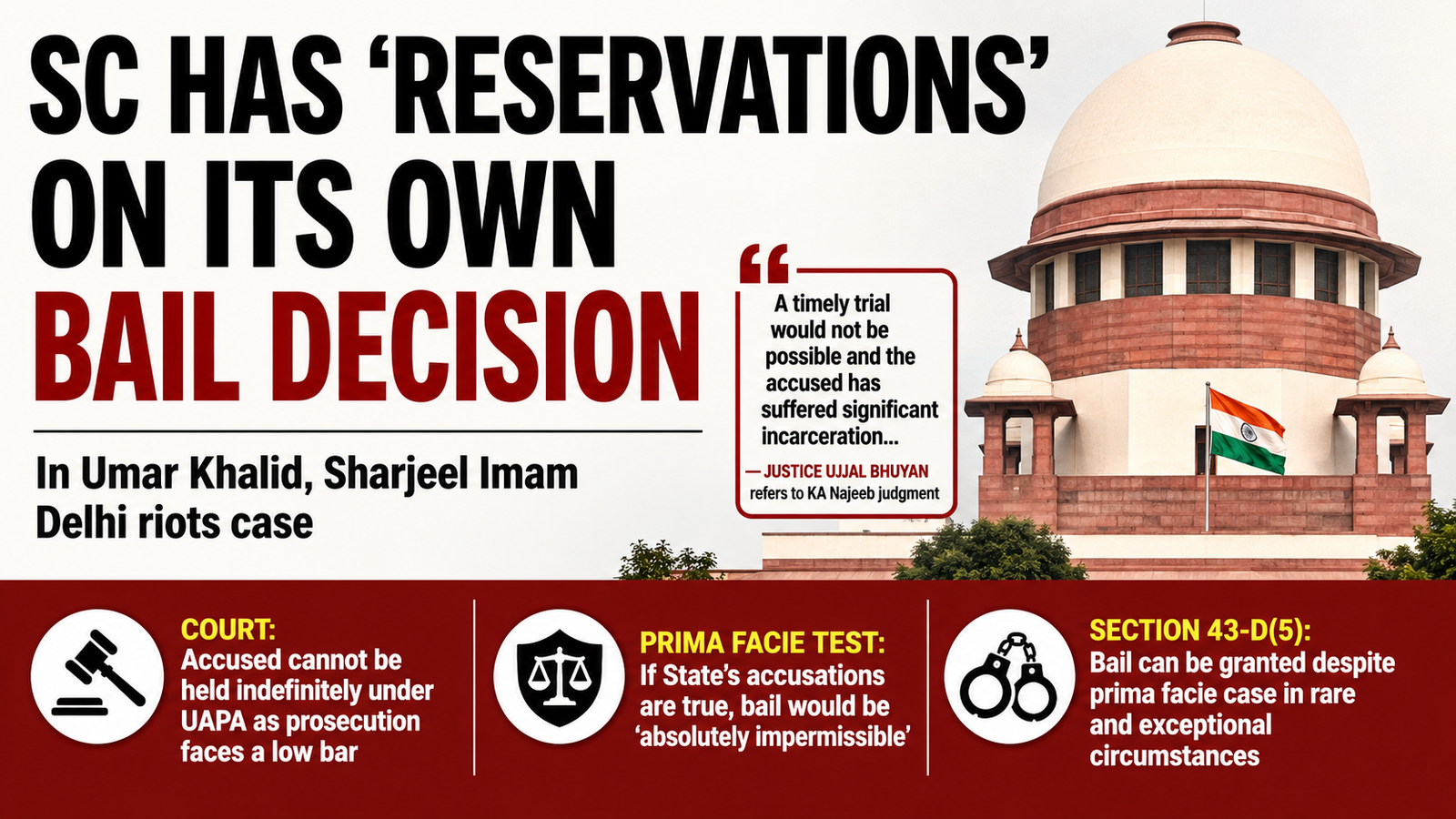
सुप्रीम कोर्ट ने कहा है कि UAPA के तहत बिना सुनवाई के लंबे समय तक कैद रखना व्यक्तिगत स्वतंत्रता का उल्लंघन है। कोर्ट ने धारा 43-D(5) की कठोरता पर सवाल उठाए हैं।
UAPA जमानत नियमों पर सुप्रीम कोर्ट की महत्वपूर्ण टिप्पणी
सुप्रीम कोर्ट ने UAPA के तहत जमानत देने की प्रक्रिया को संवैधानिक अधिकारों के दायरे में रखने पर जोर दिया है। कोर्ट ने स्पष्ट किया कि लंबी कैद और देरी से हो रही सुनवाई न्याय के मूल सिद्धांतों के विपरीत है।
"जब सुनवाई में देरी हो रही हो और आरोपी लंबे समय से जेल में हो, तो अदालत उसे जमानत पर रिहा करने का अधिकार रखती है।"
— न्यायमूर्ति उज्ज्वल भुइयां
मुख्य बातें:
- व्यक्तिगत स्वतंत्रता: जमानत नियम है और जेल अपवाद।
- संवैधानिक प्राथमिकता: अनुच्छेद 21 के तहत अधिकार UAPA की धारा 43-D(5) से ऊपर हैं।
SC expresses 'reservations' on its own bail decision under UAPA
19 May 2026
The Supreme Court highlights that prolonged incarceration without a speedy trial under the UAPA violates the constitutional right to personal liberty, questioning the strict threshold of Section 43-D(5).
SC expresses 'reservations' on its own bail decision under UAPA
In a landmark observation, the Supreme Court of India has questioned the stringent application of bail provisions under the Unlawful Activities (Prevention) Act (UAPA).
Core Judicial Observation
"The state need only satisfy a low prima facie threshold while the trial may continue for years with the result that pre-trial incarceration begins to acquire a post-trial punitive character." - Justice Ujjal Bhuyan
Key Highlights:
- Liberty vs. Detention: The court stressed that statutory restrictions under UAPA cannot override the fundamental rights guaranteed under Article 21.
- Bail as the Rule: Justice Bhuyan reiterated that "bail is the rule and jail is the exception" is a constitutional reality, not an empty slogan.
- Impact on Cases: The judgment directly impacts the ongoing cases of activists like Umar Khalid and Sharjeel Imam, who have faced years of pre-trial detention.