NFHS-6 रिपोर्ट जारी: भारत में 90% बच्चों का जन्म अस्पतालों में, कुपोषण में आई भारी गिरावट
30 May 2026
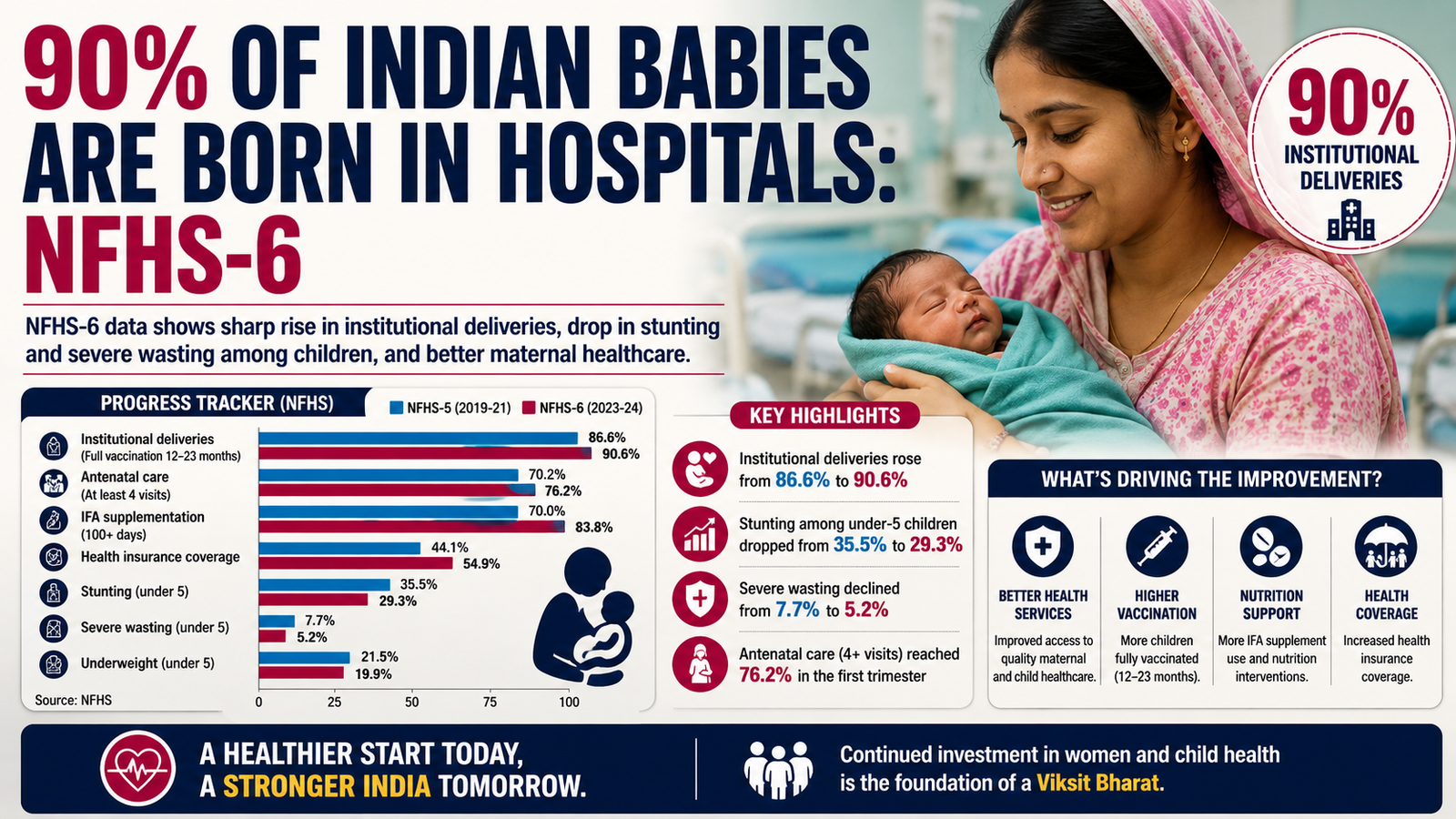
स्वास्थ्य मंत्रालय ने राष्ट्रीय परिवार स्वास्थ्य सर्वेक्षण-6 (NFHS-6) के आंकड़े जारी कर दिए हैं। इसके अनुसार मातृ और शिशु स्वास्थ्य में बड़ा सुधार हुआ है—संस्थागत प्रसव 90.6% को पार कर गया है और बच्चों में बौनापन (Stunting) घटकर 29.3% रह गया है। हालांकि, सिजेरियन (C-section) डिलीवरी में भारी वृद्धि (27.2%) एक नई चिंता का विषय है।
सामाजिक न्याय और स्वास्थ्य: NFHS-6 रिपोर्ट के प्रमुख आंकड़े
📈 सुधार के प्रमुख सकारात्मक रुझान:
- संस्थागत प्रसव (Institutional Deliveries): यह आंकड़ा पिछले 88.6% (NFHS-5) से बढ़कर 90.6% हो गया है। यानी अब 10 में से 9 बच्चों का जन्म अस्पतालों में हो रहा है।
- कुपोषण में कमी: 5 वर्ष से कम उम्र के बच्चों में बौनापन (Stunting) 35.5% से घटकर 29.3% हो गया है। वहीं गंभीर दुबलापन (Severe wasting) 7.7% से गिरकर 5.2% रह गया है।
- मातृ स्वास्थ्य: 95.9% गर्भवती महिलाओं को प्रसव पूर्व देखभाल (Antenatal care) मिली। 100 से अधिक दिनों तक आयरन-फोलिक एसिड सप्लीमेंट का सेवन 44.1% से बढ़कर 54.9% हो गया है।
- प्रजनन दर (TFR): भारत की कुल प्रजनन दर 2.0 पर स्थिर रही, जो 2.1 के 'रिप्लेसमेंट लेवल' से ठीक नीचे है।
⚠️ नई स्वास्थ्य चिंताएं और चुनौतियां
इतनी प्रगति के बावजूद, NFHS-6 सर्वेक्षण ने कई चिंताजनक रुझानों को भी हरी झंडी दिखाई है:
- सिजेरियन (C-Section) डिलीवरी में तेज वृद्धि: ऑपरेशन से होने वाले बच्चों का जन्म 21.5% से बढ़कर 27.2% हो गया है। शहरी क्षेत्रों में यह 40% है, जो WHO की 10%-15% की अनुकूल सीमा से बहुत अधिक है।
- दोहरी मार (The Dual Burden): भारत एक अजीब स्थिति का सामना कर रहा है, जहां एक तरफ कुपोषण है तो दूसरी तरफ वयस्कों में मोटापा (Obesity) तेजी से बढ़ रहा है।
- जीवनशैली के जोखिम: गैर-संचारी रोगों (NCDs) और जीवनशैली से जुड़ी बीमारियों के जोखिम में भी वृद्धि दर्ज की गई है।
NFHS-6 Data Released: 90% of Indian Babies Born in Hospitals, Child Malnutrition Drops
30 May 2026
The Health Ministry has released the National Family Health Survey-6 (NFHS-6) data, showing significant progress in maternal and child health. Institutional deliveries crossed 90.6%, and child stunting dropped to 29.3%. However, a sharp rise in C-section deliveries (27.2%) and the dual burden of malnutrition and obesity remain major concerns.
Social Issues & Health: Key Highlights of the NFHS-6 Report
📈 Major Positive Trends:
- Institutional Deliveries: Rose from 88.6% (in NFHS-5) to an impressive 90.6%, meaning 9 out of 10 Indian babies are now born in hospitals.
- Child Malnutrition Drops: Stunting (low height-for-age) among children under 5 declined from 35.5% to 29.3%. Severe wasting dropped from 7.7% to 5.2%.
- Maternal Health: 95.9% of pregnant women received antenatal care. Consumption of iron-folic acid supplements for 100+ days rose from 44.1% to 54.9%.
- Total Fertility Rate (TFR): India's TFR held steady at 2.0, which is just under the replacement threshold of 2.1.
⚠️ Emerging Health Concerns & Challenges
Despite the progress, the NFHS-6 survey flagged several alarming trends:
- Sharp Rise in C-Sections: Caesarean section deliveries increased from 21.5% to 27.2%. In urban areas, it stands at a staggering 40%, far exceeding the WHO's optimal threshold of 10%-15%.
- The Dual Burden: India faces a unique challenge of persistent undernutrition among the poor alongside rapidly increasing obesity among adults.
- Lifestyle Risks: An increase in non-communicable diseases (NCDs) and lifestyle-related risks was also prominently recorded.