कूटनीति और अंतर्राष्ट्रीय संबंध: ऐतिहासिक ब्रिक्स 2026 की सफलता पर राजनाथ सिंह ने पीएम मोदी को दी बधाई
14 Sep 2026
रक्षा मंत्री राजनाथ सिंह ने नई दिल्ली ब्रिक्स शिखर सम्मेलन 2026 की सफलता पर पीएम मोदी को बधाई दी। उन्होंने 'नई दिल्ली घोषणापत्र' (New Delhi Declaration) और 'ग्लोबल साउथ' के लिए भारत के नेतृत्व पर प्रकाश डाला।
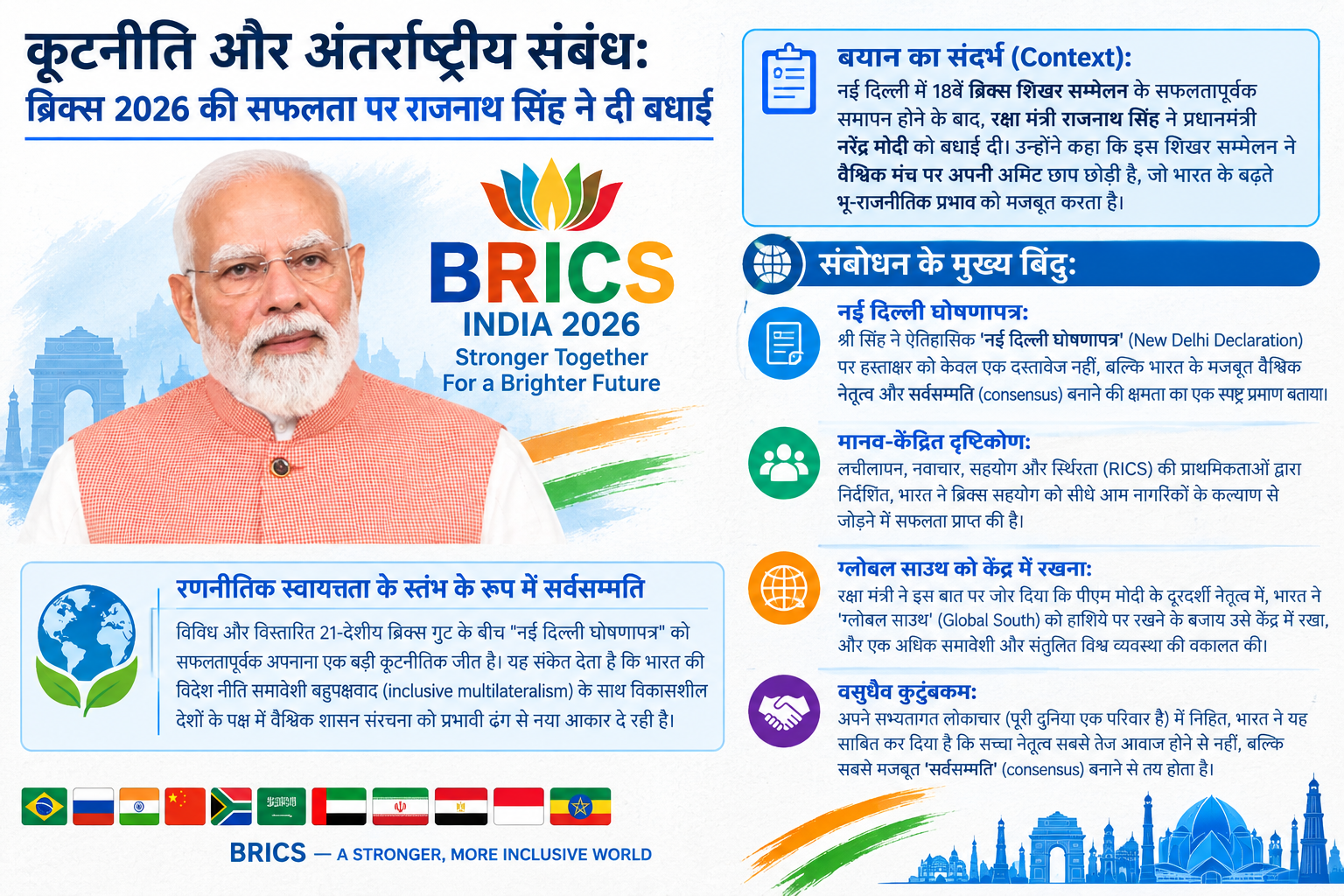
नई दिल्ली में 18वें ब्रिक्स शिखर सम्मेलन के सफलतापूर्वक संपन्न होने के बाद, रक्षा मंत्री राजनाथ सिंह ने प्रधानमंत्री नरेंद्र मोदी को बधाई दी। उन्होंने कहा कि इस शिखर सम्मेलन ने वैश्विक मंच पर अपनी अमिट छाप छोड़ी है, जो भारत के बढ़ते भू-राजनीतिक प्रभाव को मजबूत करता है।
- नई दिल्ली घोषणापत्र: श्री सिंह ने ऐतिहासिक 'नई दिल्ली घोषणापत्र' (New Delhi Declaration) पर हस्ताक्षर को केवल एक दस्तावेज नहीं, बल्कि भारत के मजबूत वैश्विक नेतृत्व और सर्वसम्मति (consensus) बनाने की क्षमता का एक स्पष्ट प्रमाण बताया।
- मानव-केंद्रित दृष्टिकोण: लचीलापन, नवाचार, सहयोग और स्थिरता (RICS) की प्राथमिकताओं द्वारा निर्देशित, भारत ने ब्रिक्स सहयोग को सीधे आम नागरिकों के कल्याण से जोड़ने में सफलता प्राप्त की है।
- ग्लोबल साउथ को केंद्र में रखना: रक्षा मंत्री ने इस बात पर जोर दिया कि पीएम मोदी के दूरदर्शी नेतृत्व में, भारत ने 'ग्लोबल साउथ' (Global South) को हाशिये पर रखने के बजाय उसे केंद्र में रखा, और एक अधिक समावेशी और संतुलित विश्व व्यवस्था की वकालत की।
- वसुधैव कुटुंबकम: अपने सभ्यतागत लोकाचार (पूरी दुनिया एक परिवार है) में निहित, भारत ने यह साबित कर दिया है कि सच्चा नेतृत्व सबसे तेज आवाज होने से नहीं, बल्कि सबसे मजबूत 'सर्वसम्मति' (consensus) बनाने से तय होता है।
विविध और विस्तारित 21-देशीय ब्रिक्स गुट के बीच 'नई दिल्ली घोषणापत्र' को सफलतापूर्वक अपनाना एक बड़ी कूटनीतिक जीत है। यह संकेत देता है कि भारत की विदेश नीति समावेशी बहुपक्षवाद (inclusive multilateralism) के साथ विकासशील देशों के पक्ष में वैश्विक शासन संरचना को प्रभावी ढंग से नया आकार दे रही है।
Diplomacy & IR: Rajnath Singh Hails PM Modi for Historic BRICS 2026 Success
14 Sep 2026
Defence Minister Rajnath Singh congratulated PM Modi on the successful conclusion of the New Delhi BRICS Summit 2026, highlighting the landmark New Delhi Declaration and India's leadership in championing the Global South.
Following the successful conclusion of the 18th BRICS Summit in New Delhi, Defence Minister Rajnath Singh extended his congratulations to Prime Minister Narendra Modi. He stated that the summit has left an indelible mark on the global stage, solidifying India’s growing geopolitical influence.
- The New Delhi Declaration: Mr. Singh termed the signing of the landmark New Delhi Declaration as more than just a document; it is a definitive statement of India's robust global leadership and consensus-building capability.
- Human-Centric Approach: Guided by the chairship priorities of Resilience, Innovation, Cooperation, and Sustainability, India successfully shifted the focus of BRICS cooperation directly toward the welfare of common citizens.
- Centering the Global South: The Defence Minister emphasized that under PM Modi's visionary leadership, India placed the Global South at the center—rather than the margins—championing a more inclusive, representative, and balanced world order.
- Vasudhaiva Kutumbakam: Rooted in its civilisational ethos (the world is one family), India demonstrated that true global leadership is defined not by having the loudest voice, but by forging the strongest consensus.
The successful adoption of the New Delhi Declaration among a diverse and expanded 21-nation BRICS bloc is a massive diplomatic victory. It signals that India's foreign policy—blending strategic autonomy with inclusive multilateralism—is effectively reshaping the global governance architecture to favor developing nations.