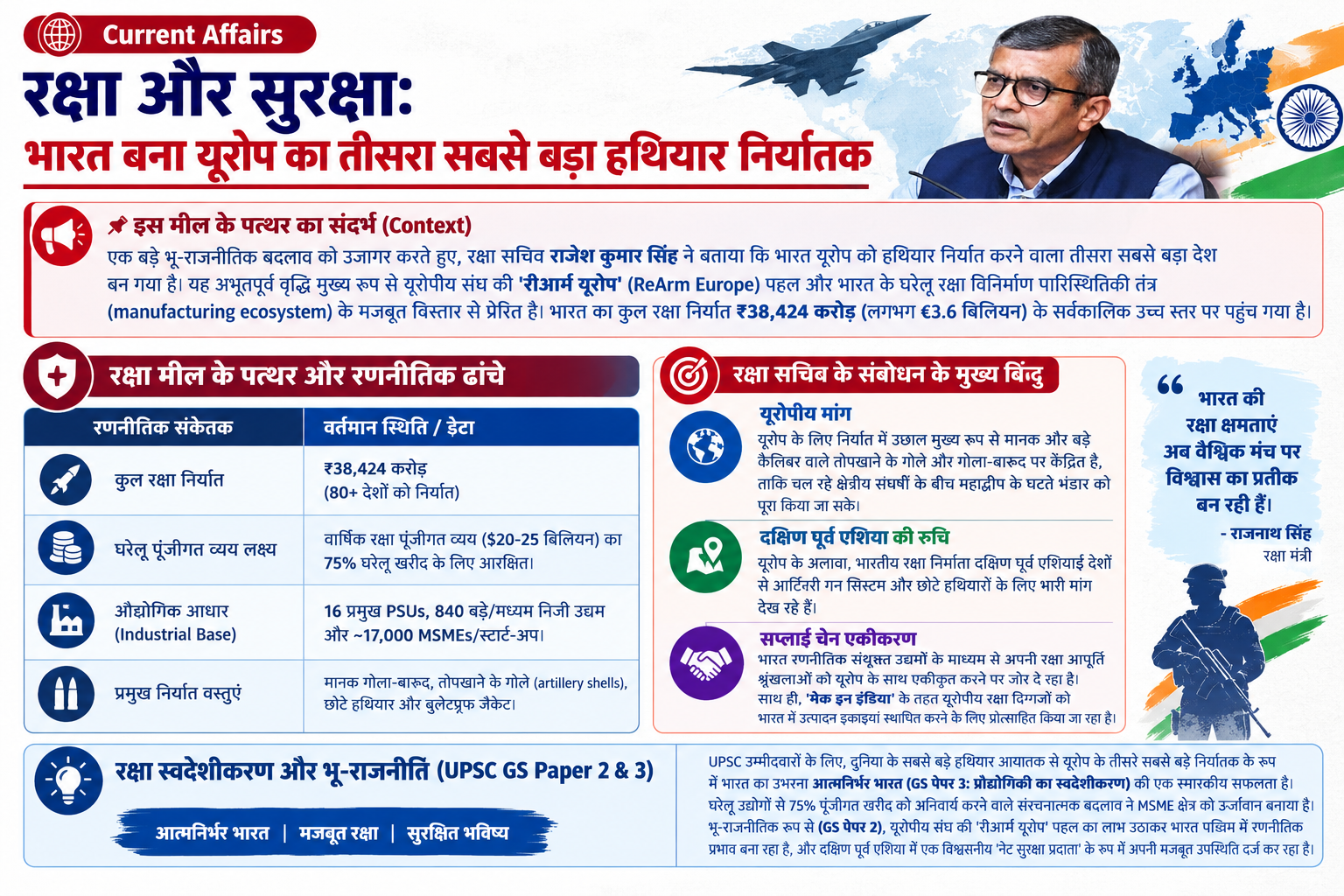
अर्थव्यवस्था और अंतर्राष्ट्रीय संबंध: कर प्रणालियां डिजिटल और डेटा-संचालित हो रही हैं - वित्त मंत्री
23 Sep 2026
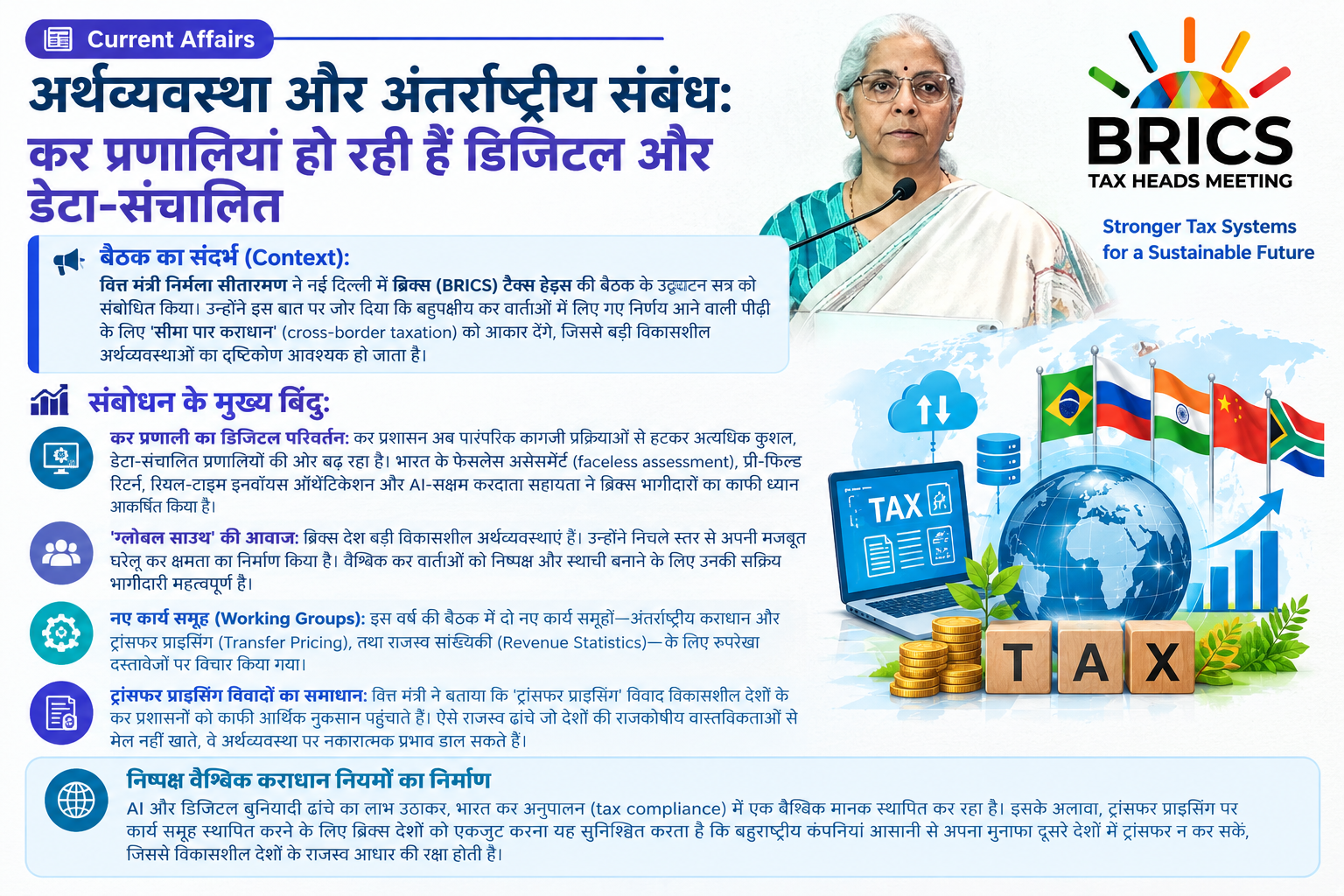
नई दिल्ली में ब्रिक्स (BRICS) टैक्स हेड्स की बैठक को संबोधित करते हुए वित्त मंत्री निर्मला सीतारमण ने भारत की AI-संचालित कर प्रक्रियाओं और सीमा पार कराधान (cross-border taxation) को आकार देने में विकासशील देशों की भूमिका पर जोर दिया।
वित्त मंत्री निर्मला सीतारमण ने नई दिल्ली में ब्रिक्स (BRICS) टैक्स हेड्स की बैठक के उद्घाटन सत्र को संबोधित किया। उन्होंने इस बात पर जोर दिया कि बहुपक्षीय कर वार्ताओं में लिए गए निर्णय आने वाली पीढ़ी के लिए 'सीमा पार कराधान' (cross-border taxation) को आकार देंगे, जिससे बड़ी विकासशील अर्थव्यवस्थाओं का दृष्टिकोण आवश्यक हो जाता है।
- कर प्रणाली का डिजिटल परिवर्तन: कर प्रशासन अब पारंपरिक कागजी प्रक्रियाओं से हटकर अत्यधिक कुशल, डेटा-संचालित प्रणालियों की ओर बढ़ रहा है। भारत के फेसलेस असेसमेंट (faceless assessment), प्री-फिल्ड रिटर्न, रियल-टाइम इनवॉयस ऑथेंटिकेशन और AI-सक्षम करदाता सहायता ने ब्रिक्स भागीदारों का काफी ध्यान आकर्षित किया है।
- 'ग्लोबल साउथ' की आवाज: ब्रिक्स देश बड़ी विकासशील अर्थव्यवस्थाएं हैं। उन्होंने निचले स्तर से अपनी मजबूत घरेलू कर क्षमता का निर्माण किया है। वैश्विक कर वार्ताओं को निष्पक्ष और स्थायी बनाने के लिए उनकी सक्रिय भागीदारी महत्वपूर्ण है।
- नए कार्य समूह (Working Groups): इस वर्ष की बैठक में दो नए कार्य समूहों—अंतर्राष्ट्रीय कराधान और ट्रांसफर प्राइसिंग (Transfer Pricing), तथा राजस्व सांख्यिकी (Revenue Statistics)—के लिए रूपरेखा दस्तावेजों पर विचार किया गया।
- ट्रांसफर प्राइसिंग विवादों का समाधान: वित्त मंत्री ने बताया कि 'ट्रांसफर प्राइसिंग' विवाद विकासशील देशों के कर प्रशासनों को काफी आर्थिक नुकसान पहुंचाते हैं। ऐसे राजस्व ढांचे जो देशों की राजकोषीय वास्तविकताओं से मेल नहीं खाते, वे अर्थव्यवस्था पर नकारात्मक प्रभाव डाल सकते हैं।
AI और डिजिटल बुनियादी ढांचे का लाभ उठाकर, भारत कर अनुपालन (tax compliance) में एक वैश्विक मानक स्थापित कर रहा है। इसके अलावा, ट्रांसफर प्राइसिंग पर कार्य समूह स्थापित करने के लिए ब्रिक्स देशों को एकजुट करना यह सुनिश्चित करता है कि बहुराष्ट्रीय कंपनियां आसानी से अपना मुनाफा दूसरे देशों में ट्रांसफर न कर सकें, जिससे विकासशील देशों के राजस्व आधार की रक्षा होती है।
Economy & IR: Tax Systems Shifting to Digital, Data-Driven Processes
23 Sep 2026
Addressing the BRICS Tax Heads meeting in New Delhi, Finance Minister Nirmala Sitharaman highlighted India's transition to AI-enabled, digital tax systems and emphasized the role of developing nations in shaping global cross-border taxation.
Finance Minister Nirmala Sitharaman delivered the inaugural address at the BRICS Tax Heads meeting in New Delhi. She underscored that ongoing multilateral tax negotiations will definitively shape cross-border taxation for the next generation, making the perspective of large developing economies essential.
- Digital Transformation of Tax: Tax administrations are rapidly shifting from traditional paper-based processes to highly efficient, data-driven systems. India's successful implementation of faceless assessment, pre-filled returns, real-time invoice authentication, and AI-enabled taxpayer assistance has drawn significant interest from BRICS partners.
- Voice of the Global South: BRICS nations, being large developing economies and source jurisdictions, have built substantial domestic tax capacity from a low base. Their active participation is crucial to ensuring that global tax negotiations remain fair and lasting.
- New Working Groups: The meeting reviewed scoping documents for two newly proposed Working Groups: one on International Taxation and Transfer Pricing, and another on Revenue Statistics.
- Addressing Transfer Pricing Disputes: The Finance Minister pointed out that transfer pricing disputes disproportionately drain the resources of developing-country tax administrations. Revenue frameworks must accurately reflect fiscal realities to protect a country's economic standing.
By leveraging AI and digital infrastructure, India is setting a global benchmark in tax compliance and ease of doing business. Furthermore, uniting BRICS nations to establish working groups on transfer pricing ensures that multinational corporations cannot easily shift profits, thereby safeguarding the sovereign revenue base of the developing world against unfair international tax practices.