बस्तर के लिए पोस्ट-माओवादी ब्लूप्रिंट: पेसा (PESA) एक्ट और 'रोड टू 2031' की पूरी जानकारी
04 Jun 2026
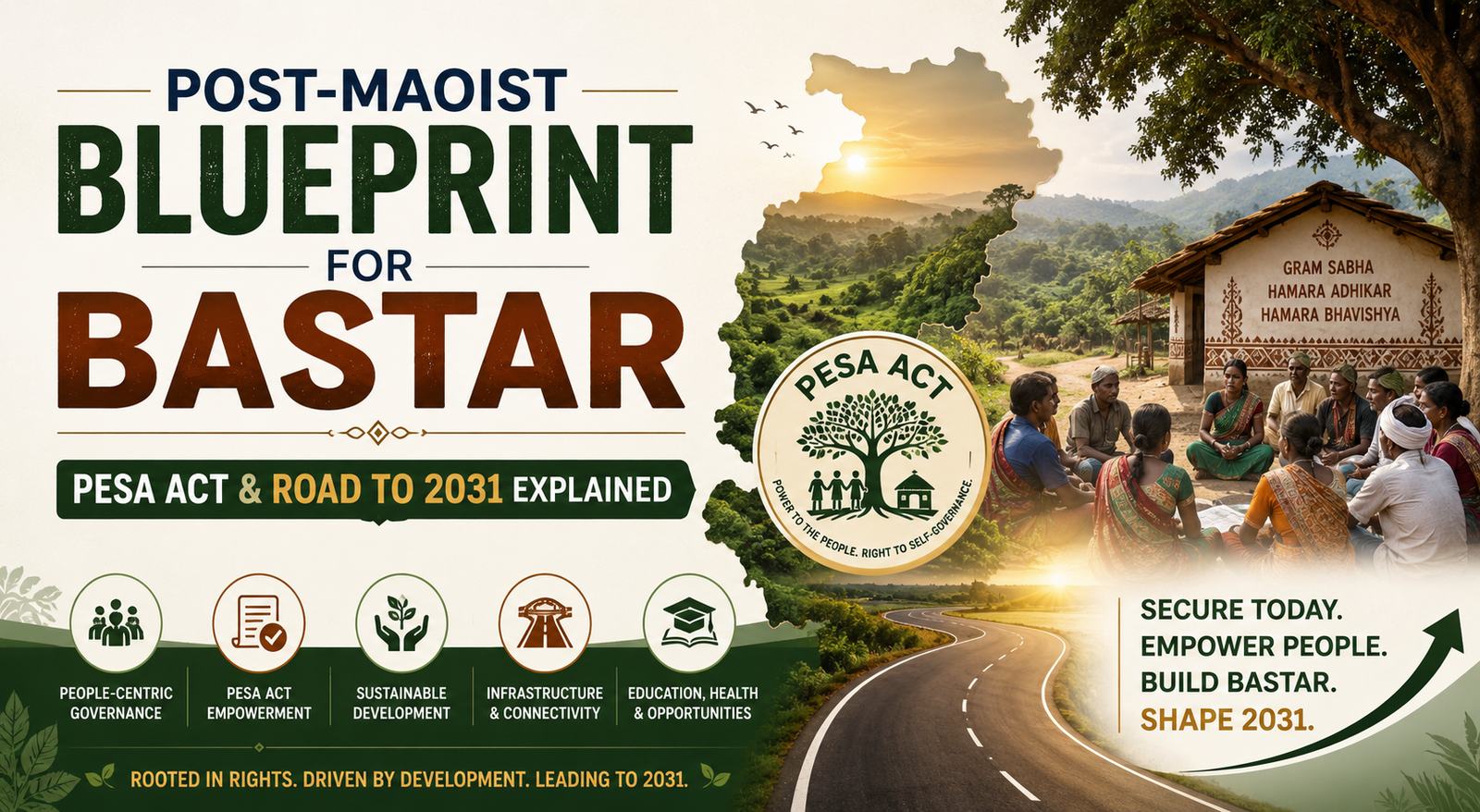
जानिए भारत सरकार के बस्तर के लिए तैयार विशेष विकास योजना 'रोड टू 2031' के बारे में। समझें पेसा कानून 1996 का महत्व, ग्राम सभाओं का सशक्तिकरण और आदिवासियों का मुख्यधारा में जुड़ाव।
बस्तर के लिए पोस्ट-माओवादी ब्लूप्रिंट (रोड टू 2031): आदिवासी समुदायों का मुख्यधारा में एकीकरण और जमीनी शासन की नई परिभाषा
📰 विस्तृत समाचार अवलोकन (Detailed Overview):
31 मार्च, 2026 को भारत को आधिकारिक तौर पर माओवाद-मुक्त घोषित किए जाने के बाद, केंद्र और राज्य सरकारों ने अपना ध्यान सुरक्षा अभियानों से हटाकर पूर्ण सामाजिक-आर्थिक विकास पर केंद्रित कर दिया है[cite: 1]। "रोड टू 2031" ब्लूप्रिंट के तहत बस्तर संभाग के आदिवासियों को देश की मुख्यधारा की अर्थव्यवस्था से जोड़ने के लिए एक दशक लंबी रणनीति तैयार की गई है[cite: 1]। इस परिवर्तनकारी शासन मॉडल का मुख्य आधार पारंपरिक आदिवासी अधिकारों और स्थानीय संसाधनों का सख्त प्रबंधन है[cite: 1]।
31 मार्च, 2026 को भारत को आधिकारिक तौर पर माओवाद-मुक्त घोषित किए जाने के बाद, केंद्र और राज्य सरकारों ने अपना ध्यान सुरक्षा अभियानों से हटाकर पूर्ण सामाजिक-आर्थिक विकास पर केंद्रित कर दिया है[cite: 1]। "रोड टू 2031" ब्लूप्रिंट के तहत बस्तर संभाग के आदिवासियों को देश की मुख्यधारा की अर्थव्यवस्था से जोड़ने के लिए एक दशक लंबी रणनीति तैयार की गई है[cite: 1]। इस परिवर्तनकारी शासन मॉडल का मुख्य आधार पारंपरिक आदिवासी अधिकारों और स्थानीय संसाधनों का सख्त प्रबंधन है[cite: 1]।
✊ संघर्ष के बाद संक्रमण काल की मुख्य चुनौतियाँ
- विश्वास की कमी: दशकों के प्रशासनिक अलगाव और संघर्ष के कारण आदिवासी आबादी और सरकारी तंत्र के बीच एक बड़ा अविश्वास रहा है। इसे दूर करने के लिए ऊपर से थोपे गए आदेशों के बजाय समुदाय के नेतृत्व वाले विकास की आवश्यकता है।
- पारंपरिक आजीविका का नुकसान: लघु वन उपज (MFP) के नियमित संग्रह में बाधा और आधुनिक कृषि बाजार से न जुड़ पाने के कारण बस्तर का युवा आर्थिक रूप से पिछड़ गया था।
- स्थानीय स्वायत्तता का ह्रास: पारंपरिक आदिवासी परिषदों के कमजोर होने से अक्सर वनों और स्थानीय संसाधनों का दोहन हुआ, जिससे स्थानीय जनजातियों की सांस्कृतिक पहचान और प्रथागत कानूनों को ठेस पहुंची।
🏗️ पेसा कानून (PESA Act), 1996 को लागू करना: रणनीतिक ढांचा
- ग्राम सभा का सशक्तिकरण: इस नए ब्लूप्रिंट के तहत ग्राम सभाओं (ग्रामीण परिषदों) को पूर्ण शक्तियां सौंपने का प्रावधान है[cite: 1]। क्षेत्र में कोई भी विकास, खनन या बुनियादी ढांचा परियोजना उनकी स्पष्ट और पूर्व सहमति के बिना शुरू नहीं की जा सकती।
- "जल, जंगल, जमीन" पर पूर्ण संप्रभुता: आदिवासी समुदायों को स्थानीय जल निकायों (जल), वन संसाधनों (जंगल) और भूमि अधिकारों (जमीन) का पूर्ण कानूनी स्वामित्व दिया जा रहा है[cite: 1]। इससे बिचौलियों का खात्मा होगा और भूमि के अवैध हस्तांतरण पर रोक लगेगी।
- लघु वन उपज (MFP) का प्रबंधन: ग्राम सभाओं को खरीद मूल्य तय करने, स्थानीय हाट-बाजारों का प्रबंधन करने और तेंदू पत्ता, महुआ और हर्रा जैसी मूल्यवान वन संपदा से होने वाली आय का 100% हिस्सा अपने पास रखने का अधिकार दिया गया है।
🌲 सामाजिक-आर्थिक एकीकरण और बुनियादी ढांचे का विकास
सतत विकास सुनिश्चित करने और उग्रवादी विचारधाराओं को दोबारा पनपने से रोकने के लिए सरकार 2031 तक ये जमीनी कदम उठा रही है:
- सामुदायिक वन संसाधन (CFR) अधिकार: वन अधिकार अधिनियम (FRA) के तहत बड़े पैमाने पर पट्टा वितरण अभियान चलाया जा रहा है ताकि आदिवासी किसानों को उनकी पुश्तैनी जमीनों पर मालिकाना हक की सुरक्षा मिल सके।
- बस्तर जनजातीय मूल्य-संवर्धन केंद्रों (Value-Addition Hubs) की स्थापना: केवल कच्चे माल के दोहन की जगह अब सरकार स्थानीय स्तर पर जैविक मिलेट्स (बाजरा), हर्बल दवाओं और पारंपरिक हस्तशिल्प के प्रोसेसिंग यूनिट्स को बढ़ावा दे रही है ताकि युवाओं को अच्छे रोजगार मिल सकें।
- सांस्कृतिक रूप से अनुकूल शिक्षा और स्वास्थ्य: गोंडी और हल्बी जैसी स्थानीय बोलियों में प्राथमिक शिक्षा मॉडल की शुरुआत की जा रही है, साथ ही घने जंगलों के अंदर तक स्वास्थ्य सेवाएं पहुंचाने के लिए 'मुख्यमंत्री हाट-बाज़ार क्लिनिक योजना' जैसी मोबाइल चिकित्सा इकाइयों को तेज किया जा रहा है।
Post-Maoist Blueprint for Bastar: PESA Act & Road to 2031 Explained
04 Jun 2026
Explore India's post-Maoist developmental blueprint for Bastar up to 2031. Learn about the implementation of the PESA Act 1996, Gram Sabha empowerment, and structural integration of tribal communities.
The Post-Maoist Blueprint for Bastar (The Road to 2031): Integrating Tribal Communities and Redefining Grassroots Governance
📰 Detailed News Overview:
Following the official declaration of a Maoist-free India on March 31, 2026, the Union and State governments have shifted their focus from security-centric operations to comprehensive socio-economic development. The "Road to 2031" blueprint outlines a decade-long strategy to seamlessly integrate the Adivasis of the Bastar division into the mainstream economy. The cornerstone of this transformative governance model is the strict enforcement of traditional tribal rights and localized resource management.
Following the official declaration of a Maoist-free India on March 31, 2026, the Union and State governments have shifted their focus from security-centric operations to comprehensive socio-economic development. The "Road to 2031" blueprint outlines a decade-long strategy to seamlessly integrate the Adivasis of the Bastar division into the mainstream economy. The cornerstone of this transformative governance model is the strict enforcement of traditional tribal rights and localized resource management.
✊ Structural Challenges in the Post-Conflict Transition
- The Trust Deficit: Decades of administrative isolation and conflict have left a deep trust deficit between the tribal population and state machinery. Overcoming this requires visible, community-led development rather than top-down bureaucratic mandates.
- Erosion of Traditional Livelihoods: Disruption in regular minor forest produce (MFP) collection and lack of modern agricultural market linkages have left Bastar's youth highly vulnerable to economic stagnation.
- Loss of Localized Autonomy: The historical dilution of local tribal councils has often led to the exploitation of pristine forest lands, sidelining the unique cultural identity and customary laws of the local clans.
🏗️ Operationalizing the PESA Act, 1996: The Strategic Framework
- Empowerment of the Gram Sabha: The blueprint mandates the absolute devolution of power to the Gram Sabhas (village councils). No developmental, mining, or infrastructure project can be initiated in the region without their explicit, prior informed consent.
- Absolute Sovereignty Over "Jal, Jungle, Zameen": Tribal communities are being granted complete legal stewardship over local water bodies (Jal), forest resources (Jungle), and land rights (Zameen). This effectively eliminates middle-men and prevents unauthorized land alienation.
- Management of Minor Forest Produce (MFP): The Gram Sabhas are empowered to fix procurement prices, manage local haat-bazaars, and retain 100% of the revenue generated from rich forest goods like Tendu leaves, Mahua, and Harra, boosting the local micro-economy.
🌲 Socio-Economic Integration and Infrastructure Interventions
To ensure sustainable growth and prevent the resurgence of radical ideologies, the government is executing targeted grassroot interventions up to 2031:
- Community Forest Resource (CFR) Rights: Massive land-titling drives under the Forest Rights Act (FRA) are being accelerated to guarantee generational security to tribal farmers over their ancestral lands.
- Establishment of Bastar Tribal Value-Addition Hubs: Moving away from raw material exploitation, the government is funding localized processing units for organic millets, herbal medicines, and traditional handicrafts to create sustainable, high-paying local jobs.
- Culturally Adaptive Education and Health: Introducing localized primary education models taught in Gondi and Halbi dialects, alongside mobile healthcare clinics (Mukhya Mantri Haat-Bazaar Clinic Yojna) to bridge the developmental gap in remote forest interiors.