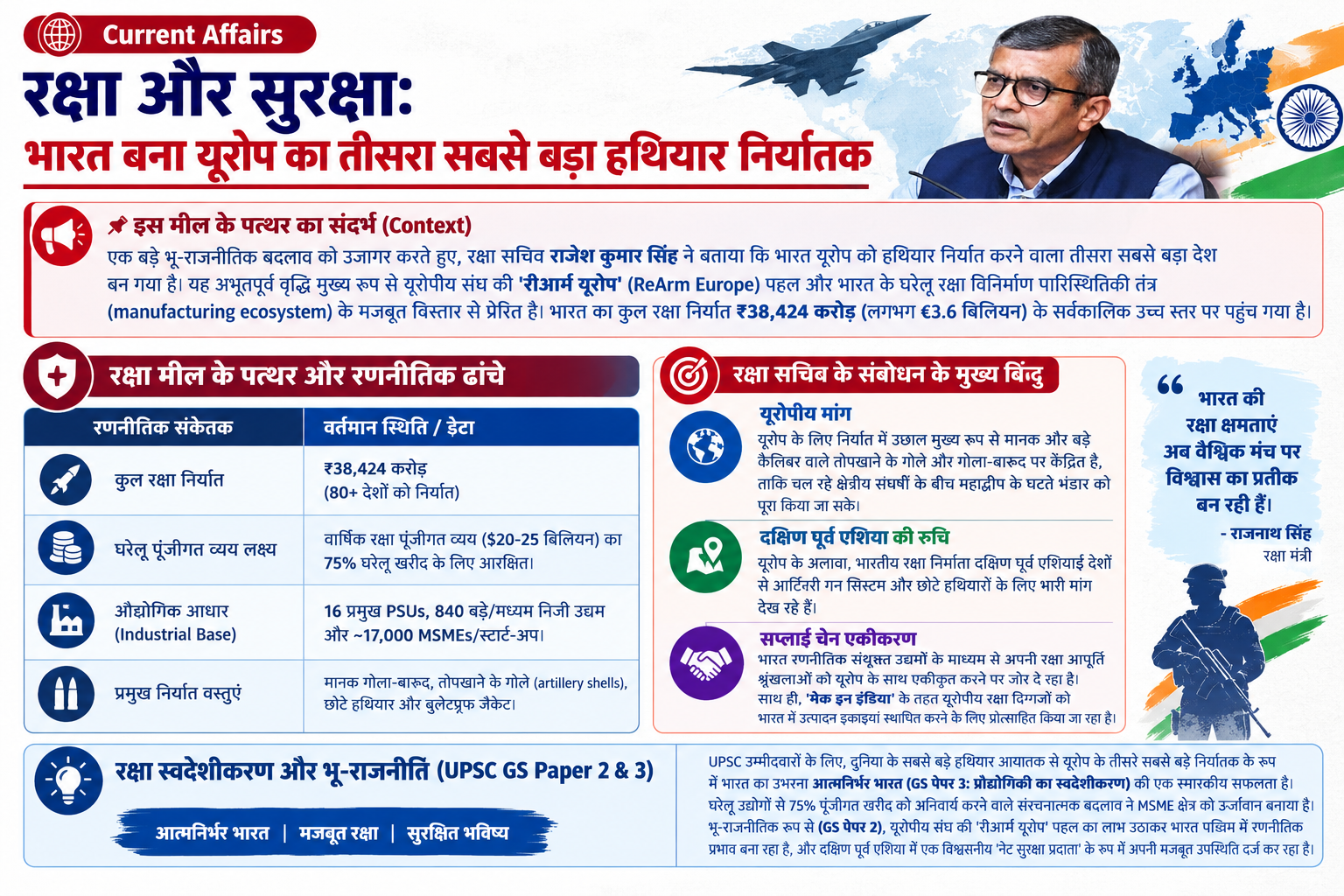
विज्ञान और प्रौद्योगिकी: नैनोमेडिसिन से होगी 'प्रिसिजन हेल्थकेयर' (सटीक स्वास्थ्य सेवा) के नए युग की शुरुआत
27 Sep 2026
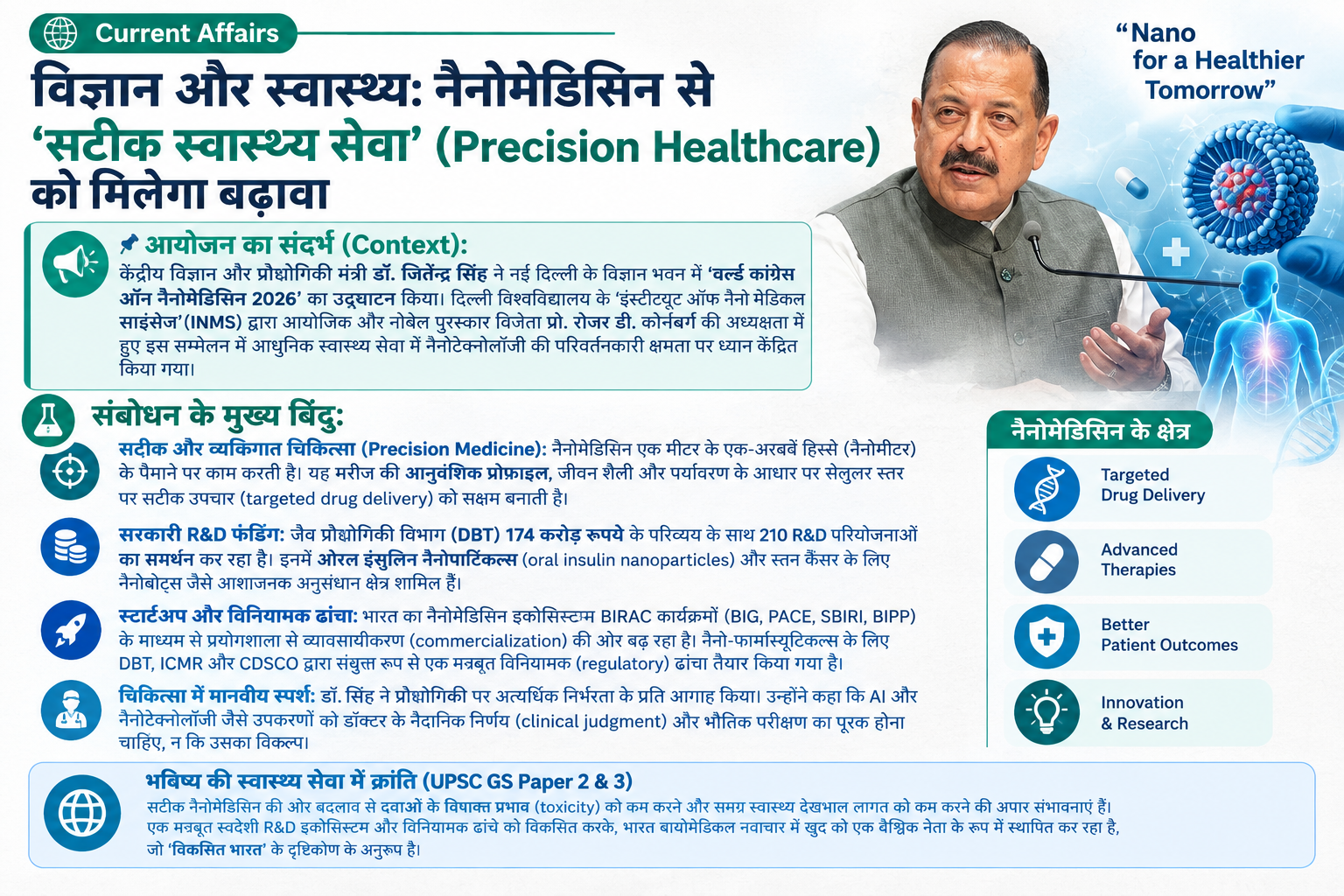
'वर्ल्ड कांग्रेस ऑन नैनोमेडिसिन 2026' का उद्घाटन करते हुए केंद्रीय मंत्री डॉ. जितेंद्र सिंह ने व्यक्तिगत स्वास्थ्य सेवा में नैनोटेक्नोलॉजी की भूमिका पर जोर दिया। DBT इस क्षेत्र में 174 करोड़ रुपये की 210 R&D परियोजनाओं का समर्थन कर रहा है।
केंद्रीय विज्ञान और प्रौद्योगिकी मंत्री डॉ. जितेंद्र सिंह ने नई दिल्ली के विज्ञान भवन में 'वर्ल्ड कांग्रेस ऑन नैनोमेडिसिन 2026' का उद्घाटन किया। दिल्ली विश्वविद्यालय के 'इंस्टीट्यूट ऑफ नैनो मेडिकल साइंसेज' (INMS) द्वारा आयोजित और नोबेल पुरस्कार विजेता प्रो. रोजर डी. कोर्नबर्ग की अध्यक्षता में हुए इस सम्मेलन में आधुनिक स्वास्थ्य सेवा में नैनोटेक्नोलॉजी की परिवर्तनकारी क्षमता पर ध्यान केंद्रित किया गया।
- सटीक और व्यक्तिगत चिकित्सा (Precision Medicine): नैनोमेडिसिन एक मीटर के एक-अरबवें हिस्से (नैनोमीटर) के पैमाने पर काम करती है। यह मरीज की आनुवंशिक प्रोफ़ाइल, जीवन शैली और पर्यावरण के आधार पर सेलुलर स्तर पर सटीक उपचार (targeted drug delivery) को सक्षम बनाती है।
- सरकारी R&D फंडिंग: जैव प्रौद्योगिकी विभाग (DBT) 174 करोड़ रुपये के परिव्यय के साथ 210 R&D परियोजनाओं का समर्थन कर रहा है। इनमें ओरल इंसुलिन नैनोपार्टिकल्स (oral insulin nanoparticles) और स्तन कैंसर के लिए नैनोबोट्स जैसे आशाजनक अनुसंधान क्षेत्र शामिल हैं।
- स्टार्टअप और विनियामक ढांचा: भारत का नैनोमेडिसिन इकोसिस्टम BIRAC कार्यक्रमों (BIG, PACE, SBIRI, BIPP) के माध्यम से प्रयोगशाला से व्यावसायीकरण (commercialization) की ओर बढ़ रहा है। नैनो-फार्मास्यूटिकल्स के लिए DBT, ICMR और CDSCO द्वारा संयुक्त रूप से एक मजबूत विनियामक (regulatory) ढांचा तैयार किया गया है।
- चिकित्सा में मानवीय स्पर्श: डॉ. सिंह ने प्रौद्योगिकी पर अत्यधिक निर्भरता के प्रति आगाह किया। उन्होंने कहा कि AI और नैनोटेक्नोलॉजी जैसे उपकरणों को डॉक्टर के नैदानिक निर्णय (clinical judgment) और भौतिक परीक्षण का पूरक होना चाहिए, न कि उसका विकल्प।
सटीक नैनोमेडिसिन की ओर बदलाव से दवाओं के विषाक्त प्रभाव (toxicity) को कम करने और समग्र स्वास्थ्य देखभाल लागत को कम करने की अपार संभावनाएं हैं। एक मजबूत स्वदेशी R&D इकोसिस्टम और विनियामक ढांचे को विकसित करके, भारत बायोमेडिकल नवाचार में खुद को एक वैश्विक नेता के रूप में स्थापित कर रहा है, जो 'विकसित भारत' के दृष्टिकोण के अनुरूप है।
Science & Tech: Nanomedicine to Drive Next-Gen Precision Healthcare
27 Sep 2026
Inaugurating the World Congress on Nanomedicine 2026 in New Delhi, Union Minister Dr. Jitendra Singh highlighted nanotechnology's role in personalized healthcare, backed by 210 DBT-funded R&D projects worth ₹174 crore.
Union Minister for Science and Technology Dr. Jitendra Singh inaugurated the World Congress on Nanomedicine 2026 at Vigyan Bhawan, New Delhi. Hosted by the Institute of Nano Medical Sciences (INMS), Delhi University, and chaired by Nobel Laureate Prof. Roger D. Kornberg, the congress focused on the transformative potential of nanotechnology in modern healthcare.
- Precision & Personalised Medicine: Nanomedicine works at the scale of one-billionth of a metre, enabling treatments tailored to a patient's genetic profile, lifestyle, and environment. It allows for highly targeted drug delivery at the cellular level, improving effectiveness while reducing toxicity.
- Government R&D Funding: The Department of Biotechnology (DBT) is aggressively supporting the sector by funding 210 R&D projects with an outlay of ₹174 crore. Promising research areas include oral insulin nanoparticles and nanobots for targeted breast cancer therapy.
- Startups & Regulatory Framework: India's nanomedicine ecosystem is moving from the lab to commercialization through BIRAC programs (BIG, PACE, SBIRI, BIPP). A robust regulatory framework has been established jointly by DBT, ICMR, and CDSCO for assessing the safety and efficacy of nanopharmaceuticals.
- The Human Touch in Healthcare: Dr. Singh cautioned against an excessive dependence on technology. While AI and nanotechnology offer groundbreaking diagnostic tools, they must complement—not replace—a doctor's clinical judgment and essential physical examination skills.
Transitioning towards precision nanomedicine offers immense potential to reduce systemic drug side-effects, tackle complex genetic and infectious diseases, and lower overall healthcare costs in the long run. By cultivating a strong indigenous R&D ecosystem and regulatory framework, India is strategically positioning itself as a global leader in biomedical innovation, aligning with the vision of a healthy and technologically advanced Viksit Bharat.