शासन और राजव्यवस्था: पीएम मोदी ने UPSC के शताब्दी समारोह को किया संबोधित
01 Oct 2026
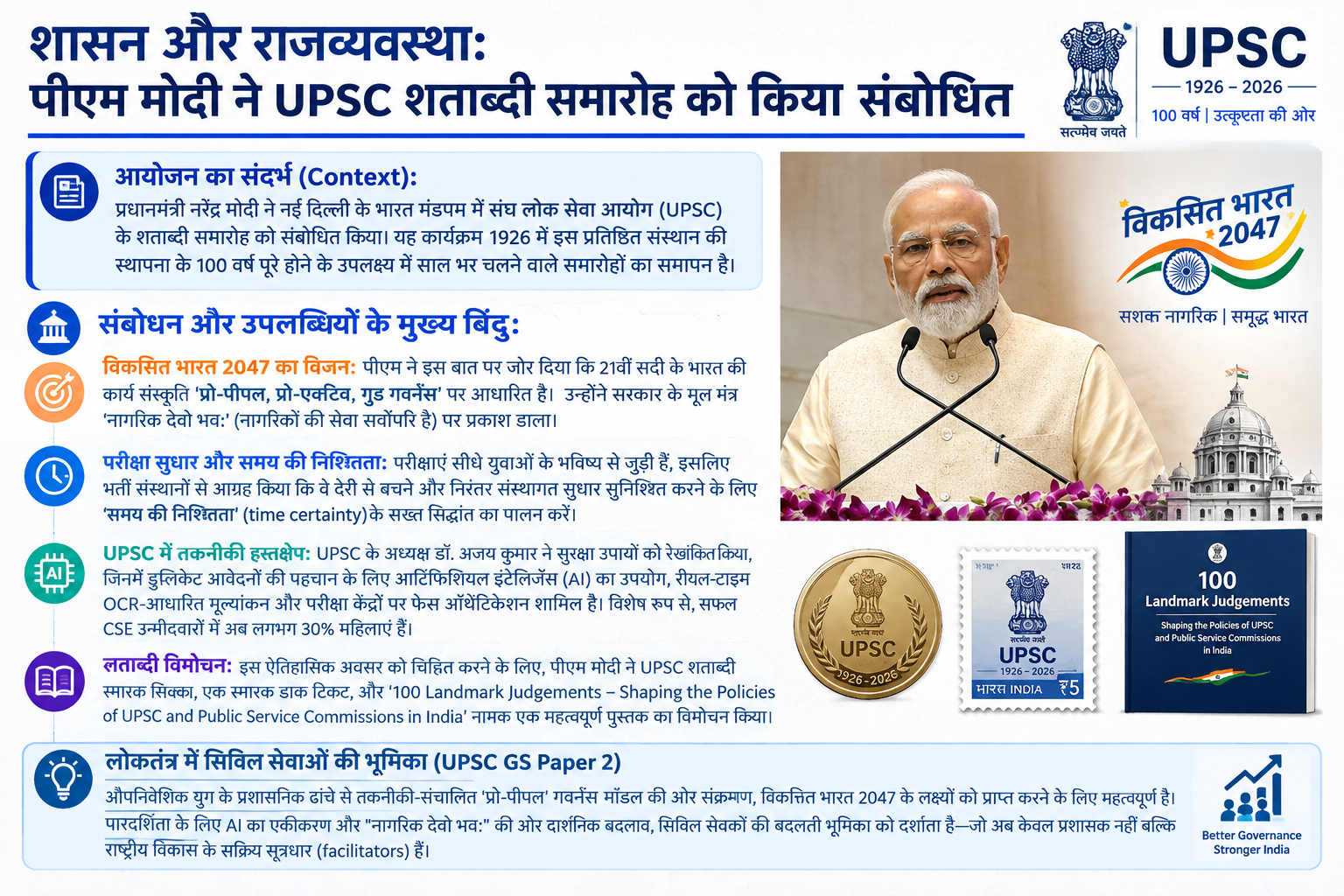
UPSC के 100 वर्ष पूरे होने पर, पीएम नरेंद्र मोदी ने भारत मंडपम में शताब्दी समारोह को संबोधित किया, 'प्रो-पीपल, प्रो-एक्टिव, गुड गवर्नेंस' पर जोर दिया और स्मारक सिक्का व डाक टिकट जारी किया।
प्रधानमंत्री नरेंद्र मोदी ने नई दिल्ली के भारत मंडपम में संघ लोक सेवा आयोग (UPSC) के शताब्दी समारोह को संबोधित किया। यह कार्यक्रम 1926 में इस प्रतिष्ठित संस्थान की स्थापना के 100 वर्ष पूरे होने के उपलक्ष्य में साल भर चलने वाले समारोहों का समापन है।
- विकसित भारत 2047 का विजन: पीएम ने इस बात पर जोर दिया कि 21वीं सदी के भारत की कार्य संस्कृति 'प्रो-पीपल, प्रो-एक्टिव, गुड गवर्नेंस' (Pro-People, Pro-Active, Good Governance) पर आधारित है। उन्होंने सरकार के मूल मंत्र 'नागरिक देवो भव:' (नागरिकों की सेवा सर्वोपरि है) पर प्रकाश डाला।
- परीक्षा सुधार और समय की निश्चितता: इस बात पर प्रकाश डालते हुए कि परीक्षाएं सीधे युवाओं के भविष्य से जुड़ी हैं, पीएम ने भर्ती संस्थानों से आग्रह किया कि वे देरी से बचने और निरंतर संस्थागत सुधार सुनिश्चित करने के लिए 'समय की निश्चितता' (time certainty) के सख्त सिद्धांत का पालन करें।
- UPSC में तकनीकी हस्तक्षेप: UPSC के अध्यक्ष डॉ. अजय कुमार ने सुरक्षा उपायों को रेखांकित किया, जिनमें डुप्लिकेट आवेदनों की पहचान करने के लिए आर्टिफिशियल इंटेलिजेंस (AI) का उपयोग, रीयल-टाइम OCR-आधारित मूल्यांकन और परीक्षा केंद्रों पर 'फेस ऑथेंटिकेशन' शामिल है। विशेष रूप से, सफल CSE उम्मीदवारों में अब लगभग 30% महिलाएं हैं।
- शताब्दी विमोचन: इस ऐतिहासिक अवसर को चिह्नित करने के लिए, पीएम मोदी ने UPSC शताब्दी स्मारक सिक्का, एक स्मारक डाक टिकट, और ‘100 Landmark Judgements – Shaping the Policies of UPSC and Public Service Commissions in India’ नामक एक महत्वपूर्ण पुस्तक का विमोचन किया।
औपनिवेशिक युग के प्रशासनिक ढांचे से तकनीकी-संचालित 'प्रो-पीपल' गवर्नेंस मॉडल की ओर संक्रमण, विकसित भारत 2047 के लक्ष्यों को प्राप्त करने के लिए महत्वपूर्ण है। पारदर्शिता के लिए AI का एकीकरण और "नागरिक देवो भव:" की ओर दार्शनिक बदलाव, सिविल सेवकों की बदलती भूमिका को दर्शाता है—जो अब केवल प्रशासक नहीं बल्कि राष्ट्रीय विकास के सक्रिय सूत्रधार (facilitators) हैं।
Governance & Polity: PM Modi Addresses UPSC Centenary Celebrations
01 Oct 2026
Marking 100 years of the UPSC, PM Narendra Modi addressed the Centenary Celebrations at Bharat Mandapam, emphasizing 'Pro-People, Pro-Active, Good Governance' and releasing a commemorative coin, stamp, and book.
Prime Minister Narendra Modi addressed the Centenary Celebrations of the Union Public Service Commission (UPSC) at Bharat Mandapam in New Delhi. The event marked the culmination of year-long celebrations commemorating 100 years since the establishment of the prestigious institution in 1926.
- Vision for Viksit Bharat 2047: The PM stressed that 21st-century India's work culture is rooted in 'Pro-People, Pro-Active, Good Governance'. He emphasized the government's core mantra of Nagarik Devo Bhava (Serving the citizens is paramount).
- Exam Reforms & Time Certainty: Highlighting that exams are directly tied to the future of the youth, the PM urged recruiting institutions to follow the strict principle of 'time certainty' to avoid delays and ensure continuous institutional reforms.
- Technological Interventions in UPSC: UPSC Chairman Dr. Ajay Kumar outlined recent robust security measures, including the use of Artificial Intelligence (AI) to identify duplicate applications, real-time OCR-based evaluation, and facial authentication at exam centers. Notably, women now constitute approximately 30% of successful CSE candidates.
- Centenary Commemorations: To mark the historic milestone, PM Modi released a UPSC Centenary Commemorative Coin, a Commemorative Stamp, and a pivotal book titled ‘100 Landmark Judgements – Shaping the Policies of UPSC and Public Service Commissions in India’.
The transition from a colonial-era administrative framework to a dynamic, tech-driven 'Pro-People' governance model is central to achieving the goals of Viksit Bharat 2047. The integration of AI for transparency and the philosophical shift towards "Nagarik Devo Bhava" reflect the evolving role of civil servants—transforming them from mere administrators into proactive facilitators of national development.