पर्यावरण संकट: विजाग (Vizag) के जहरीले स्टॉर्मवाटर ड्रेन समुद्री पारिस्थितिकी तंत्र के लिए बने बड़ा खतरा
08 Jun 2026
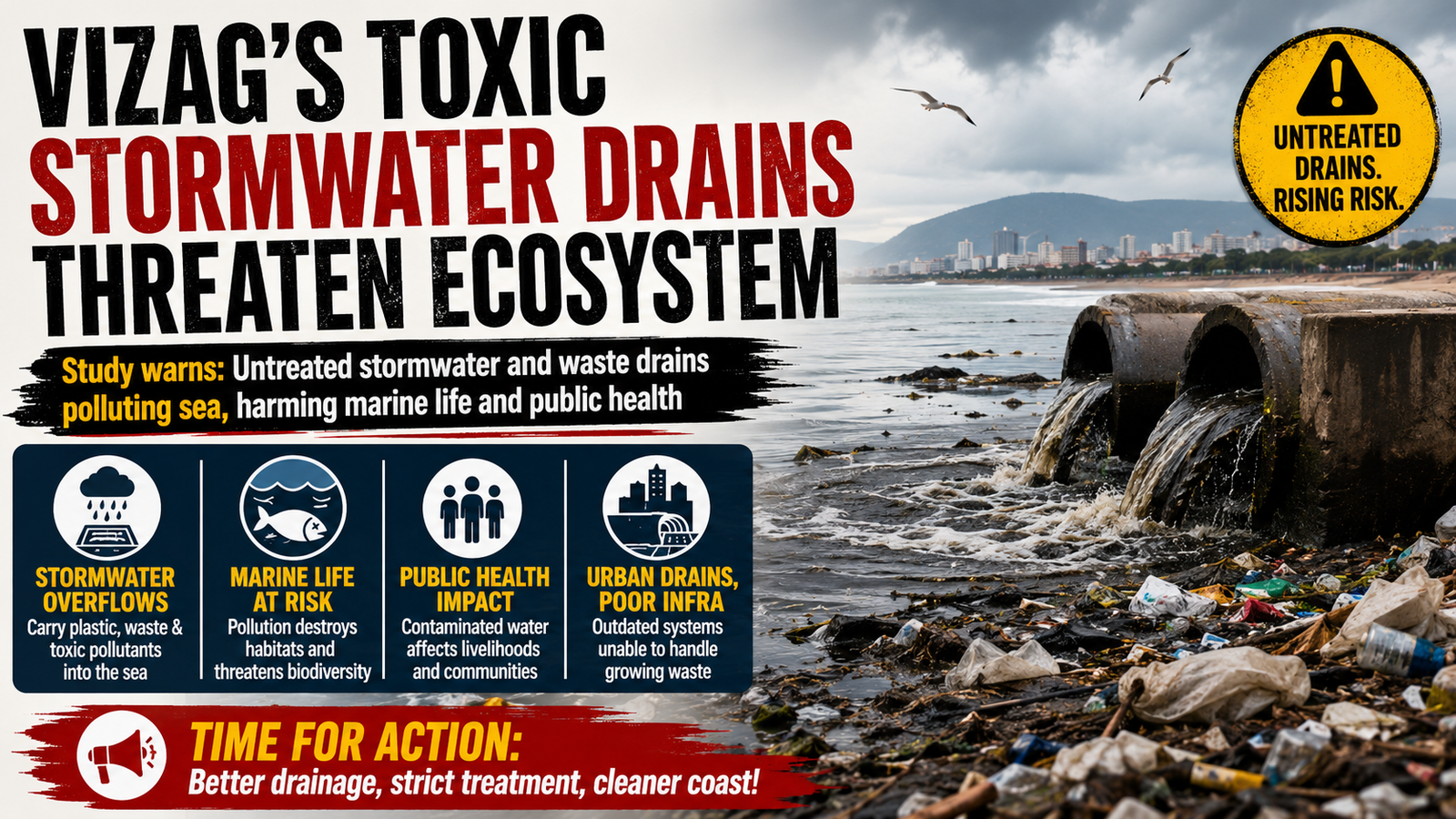
विशाखापत्तनम में बारिश के पानी के लिए बनाए गए प्राकृतिक नाले ('गड्डा') अब लाखों लीटर बिना ट्रीट किया हुआ सीवेज सीधे बंगाल की खाड़ी में बहा रहे हैं। इस बढ़ते प्रदूषण से न केवल मछुआरा समुदायों की आजीविका और स्वास्थ्य खतरे में है, बल्कि ओलिव रिडले कछुओं सहित समुद्री जीवों पर भी गंभीर संकट मंडरा रहा है।
पर्यावरण और पारिस्थितिकी: विशाखापत्तनम का समुद्री प्रदूषण संकट
📊 शहरीकरण और बुनियादी ढांचे की विफलता:
- सीवेज ट्रीटमेंट की कमी: नेशनल ग्रीन ट्रिब्यूनल (NGT) में प्रस्तुत आंकड़ों के अनुसार, शहर प्रतिदिन 224 MLD (मिलियन लीटर) सीवेज उत्पन्न करता है, जबकि 19 STPs की कुल शोधन क्षमता मात्र 179 MLD है। (सीधे तौर पर 45 MLD की कमी)।
- वास्तविक स्थिति: जल संरक्षणवादी और 'जल बिरादरी' के संस्थापक राजेंद्र सिंह का अनुमान है कि STPs के अपनी क्षमता से कम काम करने के कारण, वास्तव में लगभग 200 MLD बिना ट्रीट किया हुआ पानी समुद्र में मिल रहा है।
- ड्राई वेदर फ्लो (DWF): बारिश न होने पर भी इन नालों में घरों की रसोई और बाथरूम से निकला 'ग्रे वाटर' (Grey water) लगातार बहता रहता है।
⚠️ स्वास्थ्य और समुद्री जैव विविधता पर प्रभाव
APPCB की निगरानी में पाया गया है कि यह प्रदूषित पानी 'केमिकल ऑक्सीजन डिमांड' (COD) के तय मानकों को पूरा नहीं करता है। इसके दो बड़े नुकसान हो रहे हैं:
- मछुआरा समुदाय: पेद्दा जलारिपेटा जैसी बस्तियों में रहने वाले 7,000 से अधिक लोग त्वचा रोगों से पीड़ित हैं। मछुआरों के जाल में अब मछलियों की जगह प्लास्टिक और जहरीला कचरा फंस रहा है, जिससे उनकी आजीविका खत्म हो रही है।
- समुद्री वन्यजीव: पर्यावरणविदों ने इस प्रदूषण के कारण समुद्री पारिस्थितिकी तंत्र, विशेष रूप से तट पर आने वाले ओलिव रिडले कछुओं (Olive Ridley turtles) के अस्तित्व पर गंभीर चिंता जताई है।
Environment Crisis: Vizag's Toxic Stormwater Drains Threaten Marine Ecosystem
08 Jun 2026
In Visakhapatnam, compromised stormwater drains ('Geddas') are discharging millions of litres of untreated sewage directly into the Bay of Bengal. This escalating pollution crisis is severely impacting the livelihoods of fishing communities and threatening sensitive marine life, including Olive Ridley turtles
Environment & Ecology: Vizag's Toxic Stormwater Drains
📊 The Urbanization & Infrastructure Gap:
- The Sewage Deficit: According to the AP Pollution Control Board (APPCB) and GVMC data submitted to the NGT, the city generates 224 MLD (million litres per day) of sewage, but the treatment capacity is only 179 MLD, leaving a massive 45 MLD deficit.
- Hidden Discharges: Water conservationist Rajendra Singh (founder of Jal Biradari) estimates that due to STPs operating below capacity, around 200 MLD of untreated wastewater actually reaches the sea.
- Dry Weather Flow (DWF): Authorities note that drains carry wastewater even in the absence of rainfall, primarily 'grey water' from kitchens and bathrooms.
⚠️ Impact on Health & Marine Biodiversity
The untreated wastewater has failed to meet Chemical Oxygen Demand (COD) standards at several coastal points. This has led to two major crises:
- Fishing Communities: Over 7,000 people in settlements like Pedda Jalaripeta are suffering from skin ailments. Fishermen report pulling up plastic and toxic waste in their nets instead of fish, destroying their livelihoods.
- Marine Wildlife: Environmentalists have raised serious concerns regarding the cumulative impact of this toxicity on coastal biodiversity, particularly on sensitive species like the Olive Ridley turtles that frequent the coast.