अर्थव्यवस्था और प्रौद्योगिकी: भारत का सार्वजनिक ऋण-जीडीपी अनुपात 55% तक गिरा, सेमीकंडक्टर नेतृत्व पर नजर
14 Oct 2026
केंद्रीय मंत्री अश्विनी वैष्णव ने भारत के मजबूत होते मैक्रोइकॉनॉमिक आधार पर प्रकाश डाला, सार्वजनिक ऋण-जीडीपी अनुपात 55% तक गिरने का उल्लेख किया और भारत को एक विश्वसनीय वैश्विक सेमीकंडक्टर हब बनाने की रणनीति पेश की।
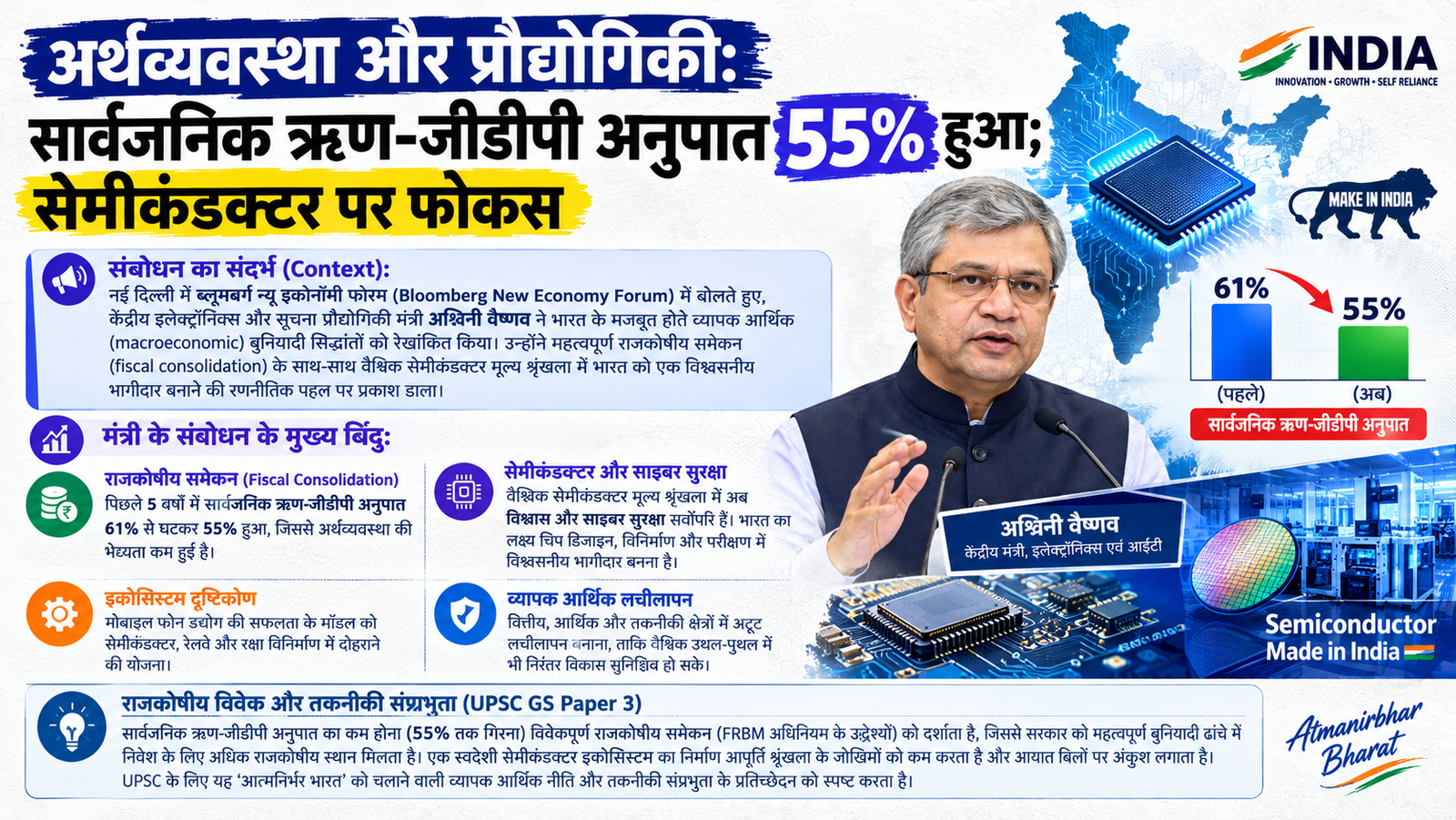
नई दिल्ली में ब्लूमबर्ग न्यू इकोनॉमी फोरम (Bloomberg New Economy Forum) में बोलते हुए, केंद्रीय इलेक्ट्रॉनिक्स और सूचना प्रौद्योगिकी मंत्री अश्विनी वैष्णव ने भारत के मजबूत होते व्यापक आर्थिक (macroeconomic) बुनियादी सिद्धांतों को रेखांकित किया। उन्होंने महत्वपूर्ण राजकोषीय समेकन (fiscal consolidation) के साथ-साथ वैश्विक सेमीकंडक्टर मूल्य श्रृंखला में भारत को एक विश्वसनीय भागीदार बनाने की रणनीतिक पहल पर प्रकाश डाला।
- राजकोषीय समेकन (Fiscal Consolidation): मजबूत आर्थिक प्रबंधन पर प्रकाश डालते हुए, श्री वैष्णव ने घोषणा की कि पिछले पांच वर्षों में भारत का सार्वजनिक ऋण-जीडीपी अनुपात (public debt-to-GDP ratio) 61% से घटकर 55% हो गया है, जिससे वैश्विक अनिश्चितताओं के प्रति अर्थव्यवस्था की भेद्यता (vulnerability) काफी कम हो गई है।
- सेमीकंडक्टर और साइबर सुरक्षा: केवल लागत संबंधी विचारों से आगे बढ़ते हुए, मंत्री ने इस बात पर जोर दिया कि वैश्विक सेमीकंडक्टर मूल्य श्रृंखला में अब विश्वास और साइबर सुरक्षा सर्वोपरि हैं। भारत का लक्ष्य खुद को चिप डिजाइन, विनिर्माण और परीक्षण में एक अत्यधिक विश्वसनीय भागीदार के रूप में स्थापित करना है।
- इकोसिस्टम दृष्टिकोण: घरेलू मोबाइल फोन उद्योग की भारी सफलता का हवाला देते हुए (जो बुनियादी असेंबली से जटिल घटक निर्माण और निर्यात तक विकसित हुआ है), सरकार की योजना सेमीकंडक्टर, रेलवे और रक्षा विनिर्माण में इस व्यापक इकोसिस्टम मॉडल को दोहराने की है।
- व्यापक आर्थिक लचीलापन (Macroeconomic Resilience): सरकार का व्यापक लक्ष्य वित्तीय, आर्थिक और तकनीकी क्षेत्रों में अटूट लचीलापन (resilience) बनाना है, ताकि वैश्विक उथल-पुथल के समय भी निरंतर विकास सुनिश्चित हो सके।
सार्वजनिक ऋण-जीडीपी अनुपात का कम होना (55% तक गिरना) विवेकपूर्ण राजकोषीय समेकन (FRBM अधिनियम के उद्देश्यों) को दर्शाता है, जिससे सरकार को महत्वपूर्ण बुनियादी ढांचे में निवेश करने के लिए अधिक राजकोषीय स्थान (fiscal space) मिलता है। इसके साथ ही, एक स्वदेशी सेमीकंडक्टर इकोसिस्टम का निर्माण आपूर्ति श्रृंखला के जोखिमों को कम करता है और इलेक्ट्रॉनिक्स आयात बिलों पर अंकुश लगाता है। UPSC उम्मीदवारों के लिए, यह 'आत्मनिर्भर भारत' को चलाने वाली ध्वनि व्यापक आर्थिक नीति और तकनीकी संप्रभुता के प्रतिच्छेदन (intersection) को पूरी तरह से स्पष्ट करता है।
Economy & Tech: India's Public Debt-to-GDP Falls to 55%, Eyes Semiconductor Leadership
14 Oct 2026
Union Minister Ashwini Vaishnaw highlighted India's robust macroeconomic health, noting a significant drop in the public debt-to-GDP ratio to 55%, while outlining strategic plans to establish India as a trusted global semiconductor and manufacturing hub.
Speaking at the Bloomberg New Economy Forum in New Delhi, Union Electronics and Information Technology Minister Ashwini Vaishnaw underscored India’s strengthening macroeconomic fundamentals. He highlighted significant fiscal consolidation alongside India's strategic push to become a trusted, end-to-end partner in the global semiconductor value chain.
- Fiscal Consolidation: Highlighting robust economic management, Mr. Vaishnaw announced that India’s public debt-to-GDP ratio has successfully declined from 61% to 55% over the past five years, significantly reducing the economy's vulnerability to global uncertainties.
- Semiconductor & Cybersecurity: Moving beyond mere cost considerations, the Minister emphasized that trust and cybersecurity are now paramount in the global semiconductor value chain. India aims to position itself as a highly trusted partner in chip design, manufacturing, and testing.
- The Ecosystem Approach: Citing the massive success of the domestic mobile phone industry—which evolved from basic assembly to complex component manufacturing and exports—the government plans to replicate this comprehensive ecosystem model in semiconductor, railway, and defence manufacturing.
- Macroeconomic Resilience: The overarching goal of the administration is to build unshakeable resilience across the financial, economic, and technological sectors, ensuring sustained growth even during global turbulent times.
A reducing public debt-to-GDP ratio (dropping to 55%) reflects prudent fiscal consolidation (FRBM Act objectives), providing the government with greater fiscal space to invest in critical infrastructure. Concurrently, building an indigenous semiconductor ecosystem mitigates supply chain risks and curbs electronics import bills. For UPSC aspirants, this perfectly illustrates the intersection of sound macroeconomic policy and technological sovereignty driving 'Aatmanirbhar Bharat'.