शासन और सुधार: जन विश्वास अधिनियम 'सेवा और सुशासन' के प्रति सरकार की प्रतिबद्धता को दर्शाता है
18 Oct 2026
पीएम मोदी के 'जन सेवा से देश सेवा' के मंत्र को साकार करते हुए, जन विश्वास अधिनियम भारत के नियामक ढांचे में एक बड़ा बदलाव है। 40,000 से अधिक अनुपालनों को खत्म करना और छोटे अपराधों को अपराध की श्रेणी से बाहर करना 'विकसित भारत 2047' की दिशा में एक महत्वपूर्ण कदम है।
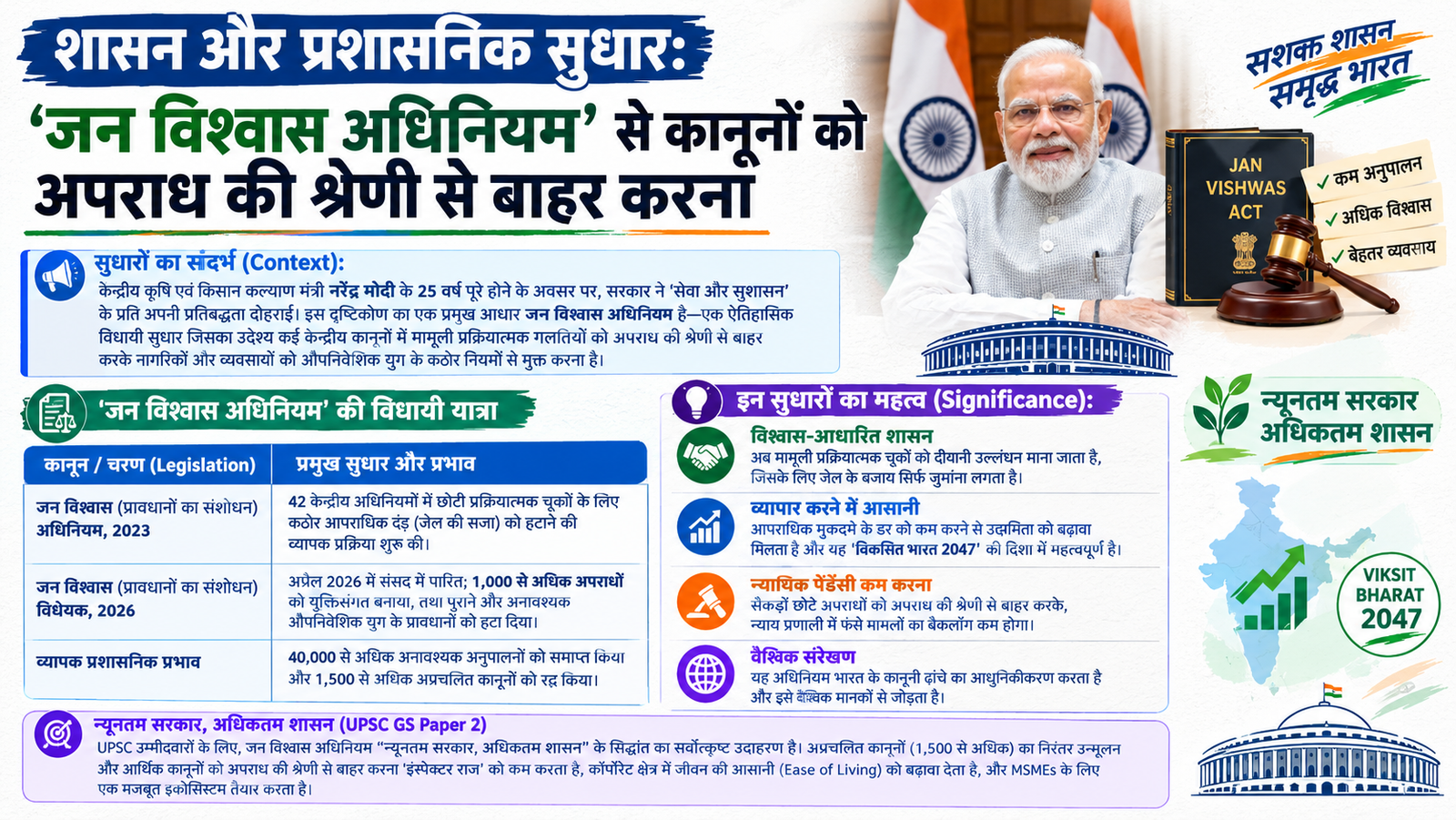
सार्वजनिक सेवा में प्रधानमंत्री नरेंद्र मोदी के 25 वर्ष पूरे होने के अवसर पर, सरकार ने 'सेवा और सुशासन' (Service and Good Governance) के प्रति अपनी प्रतिबद्धता दोहराई। इस दृष्टिकोण का एक प्रमुख आधार जन विश्वास अधिनियम (Jan Vishwas Act) है—एक ऐतिहासिक विधायी सुधार जिसका उद्देश्य कई केंद्रीय कानूनों में मामूली प्रक्रियात्मक गलतियों को अपराध की श्रेणी से बाहर (decriminalize) करके नागरिकों और व्यवसायों को औपनिवेशिक युग के कठोर नियमों से मुक्त करना है।
| कानून / चरण (Legislation) | प्रमुख सुधार और प्रभाव |
|---|---|
| जन विश्वास (प्रावधानों का संशोधन) अधिनियम, 2023 | 42 केंद्रीय अधिनियमों में छोटी प्रक्रियात्मक चूकों के लिए कठोर आपराधिक दंड (जेल की सजा) को हटाने की व्यापक प्रक्रिया शुरू की। |
| जन विश्वास (प्रावधानों का संशोधन) विधेयक, 2026 | अप्रैल 2026 में संसद में पारित; 1,000 से अधिक अपराधों को युक्तिसंगत (rationalize) बनाया, तथा पुराने और अनावश्यक औपनिवेशिक युग के प्रावधानों को हटा दिया। |
| व्यापक प्रशासनिक प्रभाव | 40,000 से अधिक अनावश्यक अनुपालनों (compliances) को समाप्त किया और 1,500 से अधिक अप्रचलित कानूनों को रद्द किया। |
- विश्वास-आधारित शासन (Trust-Based Governance): यह अधिनियम नियामक दर्शन को संदेह (suspicion) की व्यवस्था से हटाकर 'विश्वास' की व्यवस्था में बदलता है। अब मामूली प्रक्रियात्मक चूकों को दीवानी उल्लंघन (civil infractions) माना जाता है, जिसके लिए जेल के बजाय सिर्फ जुर्माना लगता है।
- व्यापार करने में आसानी (Ease of Doing Business): वाणिज्य और उद्योग मंत्री पीयूष गोयल के अनुसार, आपराधिक मुकदमे के डर को कम करने से उद्यमिता (entrepreneurship) को बढ़ावा मिलता है और यह 'विकसित भारत 2047' प्राप्त करने की दिशा में एक महत्वपूर्ण मील का पत्थर है।
- न्यायिक पेंडेंसी कम करना: सैकड़ों छोटे अपराधों को अपराध की श्रेणी से बाहर करके, सरकार का लक्ष्य भारत की न्याय प्रणाली में फंसे छोटे-मोटे मामलों के भारी बैकलॉग को काफी हद तक कम करना है।
- वैश्विक संरेखण (Global Alignment): यह अधिनियम भारत के कानूनी ढांचे का आधुनिकीकरण करता है, और इसे अनुपातिक और जोखिम-आधारित विनियमन (proportionate and risk-based regulation) के विश्व स्तर पर स्वीकृत सिद्धांतों के साथ संरेखित करता है।
UPSC उम्मीदवारों के लिए, जन विश्वास अधिनियम "न्यूनतम सरकार, अधिकतम शासन" (Minimum Government, Maximum Governance) के सिद्धांत का सर्वोत्कृष्ट उदाहरण है। अप्रचलित कानूनों (1,500 से अधिक) का निरंतर उन्मूलन और आर्थिक कानूनों को अपराध की श्रेणी से बाहर करना 'इंस्पेक्टर राज' (Inspector Raj) को कम करता है, कॉर्पोरेट क्षेत्र में जीवन की आसानी (Ease of Living) को बढ़ावा देता है, और MSMEs के लिए एक मजबूत इकोसिस्टम तैयार करता है।
Governance & Reforms: Jan Vishwas Act Paves the Way for 'Seva and Sushasan
18 Oct 2026
Reflecting PM Modi's mantra of "Jan Seva Se Desh Seva," the Jan Vishwas Act marks a paradigm shift in India's regulatory framework by decriminalizing minor offenses, abolishing over 40,000 compliances, and promoting ease of doing business for a Viksit Bharat 2047.
Commemorating Prime Minister Narendra Modi’s 25 years in public service, the government reaffirmed its commitment to Seva and Sushasan (Service and Good Governance). A cornerstone of this vision is the Jan Vishwas Act—a landmark legislative reform aimed at unshackling citizens and businesses from colonial-era regulatory overhangs by decriminalizing minor procedural mistakes across multiple Central laws.
| Legislation / Phase | Key Reforms & Impact |
|---|---|
| Jan Vishwas (Amendment of Provisions) Act, 2023 | Initiated the massive process of removing severe criminal penalties (jail terms) for minor procedural defaults across 42 Central acts. |
| Jan Vishwas (Amendment of Provisions) Bill, 2026 | Passed in April 2026; rationalized more than 1,000 additional offenses, removing outdated and redundant colonial-era regulatory provisions. |
| Overarching Governance Impact | Abolished over 40,000 unnecessary compliances and scrapped over 1,500 obsolete laws. |
- Trust-Based Governance: Shifting the regulatory philosophy from a regime of suspicion to one of trust, the Act treats minor procedural lapses as civil infractions punishable by fines rather than criminal offenses leading to imprisonment.
- Ease of Doing Business: As highlighted by Commerce and Industry Minister Piyush Goyal, minimizing the fear of criminal prosecution encourages entrepreneurship, boosts FDI, and acts as a significant milestone toward achieving Viksit Bharat 2047.
- Reducing Judicial Pendency: By decriminalizing hundreds of minor offenses, the government aims to severely reduce the massive backlog of petty cases clogging India's judicial system.
- Global Alignment: The Act modernizes India’s legal framework, aligning it directly with globally accepted principles of proportionate and risk-based regulation.
For UPSC aspirants, the Jan Vishwas Act is the quintessential example of the "Minimum Government, Maximum Governance" doctrine. It perfectly addresses GS Paper 2 topics related to Statutory/Regulatory Bodies and Governance Reforms. The continuous abolition of obsolete laws (over 1,500) and the decriminalization of economic laws mitigate 'Inspector Raj', promoting corporate ease of living and fostering a robust ecosystem for MSMEs, which are crucial for India's socio-economic empowerment.